

Database-Driven Marketing: How Data Powers Every B2B Campaign
In B2B marketing, guesswork is expensive. A database-driven approach gives you the structure to target the right accounts, personalize messaging, and measure what actually drives pipeline.
When your campaigns are built on clean, segmented, and behavior-based data, every email, ad, landing page, and nurture flow becomes more relevant. That relevance improves engagement, increases conversion rates, and helps marketing and sales work from the same source of truth.
What database-driven marketing means
Database-driven marketing is the practice of using customer and prospect data to plan, personalize, and optimize campaigns. Instead of sending the same message to everyone, you use firmographic, behavioral, intent, and performance data to guide every decision.
For B2B teams, this is especially important because buying cycles are longer and multiple stakeholders are involved. A database helps you identify who to target, what stage they are in, and which content is most likely to move them forward.
A strong database also improves alignment across channels. Your email, paid media, content, and sales outreach all become more effective when they are informed by the same structured account and contact data.
Why data matters in B2B campaigns
Data makes campaigns sharper because it replaces assumptions with evidence. It helps you decide which industries to prioritize, which roles to target, what content to create, and where to allocate budget for the best return.
It also helps you understand how buyers behave over time. Website visits, form fills, content downloads, email engagement, and event registrations all reveal intent signals that can be used to score leads and trigger next-step actions.
Another major benefit is reporting. When campaigns are built around clean data, you can connect marketing activity to pipeline outcomes instead of stopping at clicks or impressions. That makes it easier to prove ROI and make better decisions in future campaigns.
The data types that power campaigns
Not all data is equally useful. In B2B, the most valuable campaigns usually rely on a mix of firmographic, technographic, behavioral, intent, and performance data.
Firmographic data includes company size, industry, revenue range, and location. This is the foundation for segmenting accounts and tailoring offers to the realities of each business type.
Technographic data tells you what tools or platforms a company already uses. That can help you position your product against current systems, identify integration opportunities, and prioritize prospects with a higher fit.
Behavioral data captures activity such as page views, downloads, clicks, webinar sign-ups, and email interactions. Intent data goes one step further by showing active research behavior, which can indicate when a buyer is closer to a decision.
Performance data comes from your own campaigns and shows what is working over time. Metrics like open rate, CTR, conversion rate, and cost per lead help you refine your strategy and avoid repeating low-performing tactics.
How data improves segmentation
Segmentation is one of the biggest advantages of database-driven marketing. Instead of blasting one generic message to everyone, you can group contacts by industry, job role, company size, funnel stage, or engagement level.
That makes it easier to build campaigns that feel relevant. For example, a CFO might receive ROI-focused proof points, while an operations leader might respond better to workflow efficiency or implementation details.
A well-structured database also supports account-based marketing. You can prioritize target accounts, map buying committees, and create touchpoints that speak to each stakeholder’s concerns without losing consistency across the account.
Personalization at scale
Personalization is no longer limited to using a first name in an email. With the right data, you can tailor subject lines, content offers, calls to action, and nurture paths based on a prospect’s behavior and profile.
This matters because different buyers need different content at different stages. Early-stage prospects may want educational blog posts and guides, while decision-stage leads may prefer case studies, comparison pages, or calculators.
A practical example is an automation sequence that sends a blog reader to a related case study after they revisit the site, then routes highly engaged leads to sales once they cross a scoring threshold. That kind of journey feels timely without being overly aggressive.
Channel performance gets smarter
Database-driven marketing also improves channel strategy. Instead of assuming every channel deserves equal budget, you can use data to see where each audience responds best.
LinkedIn Ads may work well for enterprise decision-makers, while email nurturing often performs better for mid-funnel engagement. Paid search can capture high-intent visitors, and webinars can generate qualified leads when the topic is aligned with buyer pain points.
The key is to track channel-level performance consistently. Once you know which campaigns create the most qualified leads and the strongest opportunities, you can shift spending toward the channels that move revenue, not just traffic.
Predictive scoring and forecasting
Modern database-driven marketing is not only about reporting on the past. It also helps predict what will happen next through lead scoring and forecasting models.
By analyzing historical conversion patterns, you can identify which behaviors and attributes are most correlated with opportunity creation or closed deals. That makes lead scoring more accurate and helps sales focus on the accounts most likely to convert.
Predictive analytics can also improve timing. If your data shows that leads who engage with multiple assets within a short window are more likely to book meetings, your team can prioritize those contacts immediately.
Common data problems
Even strong campaigns can fail if the database is weak. Poor data quality, duplicate records, stale contacts, and siloed systems all reduce performance and make reporting unreliable.
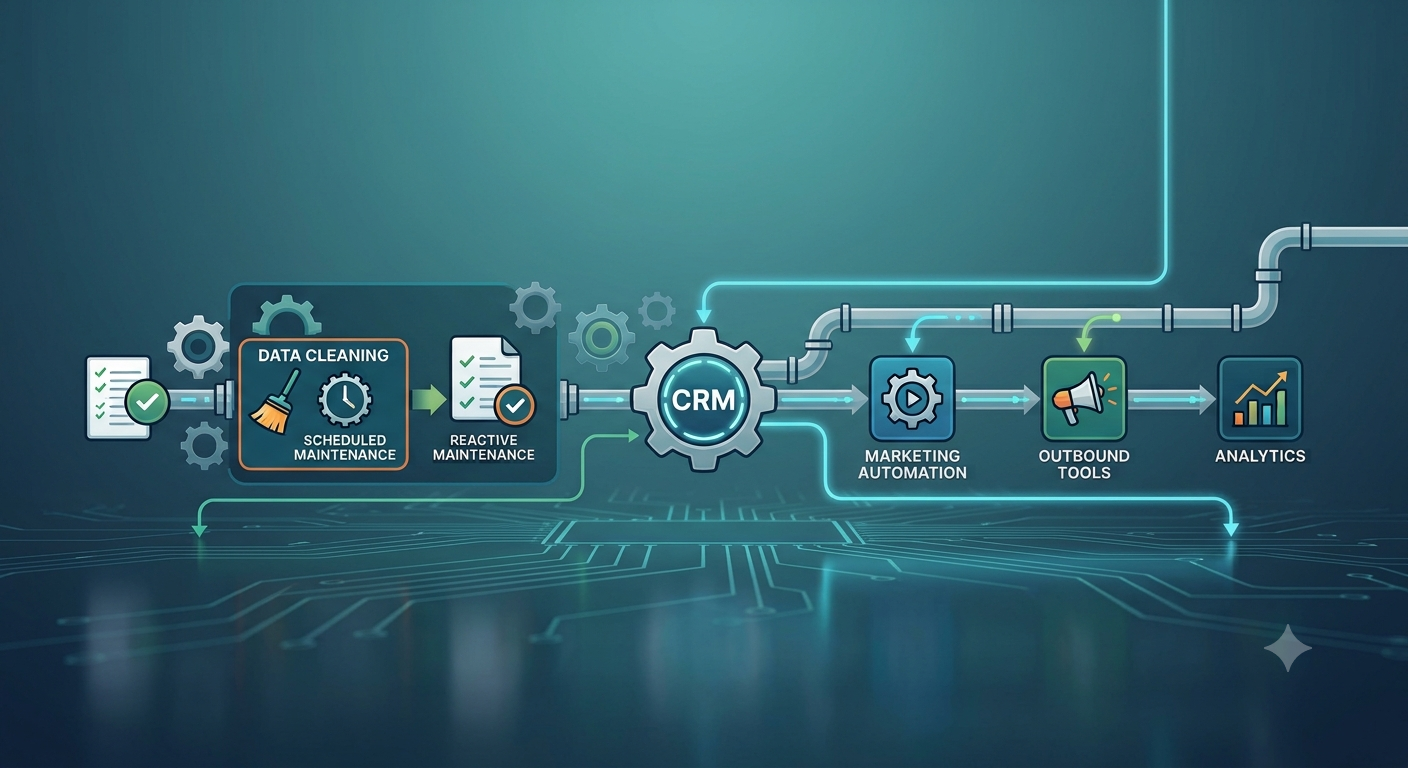
One of the biggest issues is fragmented data across CRM, marketing automation, and sales tools. When records do not sync properly, teams lose visibility into the full buyer journey and miss opportunities to follow up at the right time.
Another challenge is overreliance on automation. Tools are useful, but strategy still matters. Data needs human oversight so you can spot gaps, verify assumptions, and avoid making decisions based on incomplete or outdated information.
How to build a better database
Start by defining the fields that matter most for your sales process. For most B2B teams, that means standardizing company size, industry, role, territory, lifecycle stage, source, and engagement history.
Next, clean and enrich your records regularly. Remove duplicates, validate email addresses, update old job titles, and fill in missing firmographic information so segmentation stays accurate.
Then connect your systems. A unified CRM and marketing automation workflow makes it easier to route leads, trigger campaigns, and report on results without manual workarounds.
Finally, create governance rules for data usage. If your team agrees on naming conventions, lifecycle definitions, and lead scoring logic, your campaigns will be easier to scale and easier to optimize.
Turning content into a data asset
In a database-driven model, content is more than a branding tool. It becomes a behavioral signal that tells you what your audience cares about and where they are in the buying cycle.
That is why blog content, case studies, webinars, and comparison pages should all be tracked as part of your lead intelligence system. The more you know about what a prospect consumes, the better you can personalize the next step.
This also makes SEO content more valuable. A well-optimized blog can attract search traffic, capture leads, and feed retargeting and nurture campaigns with the exact themes your audience is already researching.
Best practices for B2B teams
Use your database to answer practical questions before launching any campaign: who is the audience, what data proves fit, what content matches their stage, and how will success be measured?
Build campaigns around one clear objective at a time. Whether the goal is lead capture, demo requests, event sign-ups, or re-engagement, a focused campaign is easier to optimize and easier to attribute.
Refresh your database and content together. If your data shows a new buying trend or audience segment, update your messaging, landing pages, and nurture flows so the campaign stays aligned with market reality.
Conclusion
Database-driven marketing gives B2B teams the clarity to target better, personalize faster, and measure more accurately. When data powers every campaign, marketing becomes more efficient and more connected to revenue.
The brands that win are not the ones with the most data, but the ones that use it consistently across segmentation, content, channel strategy, and optimization.