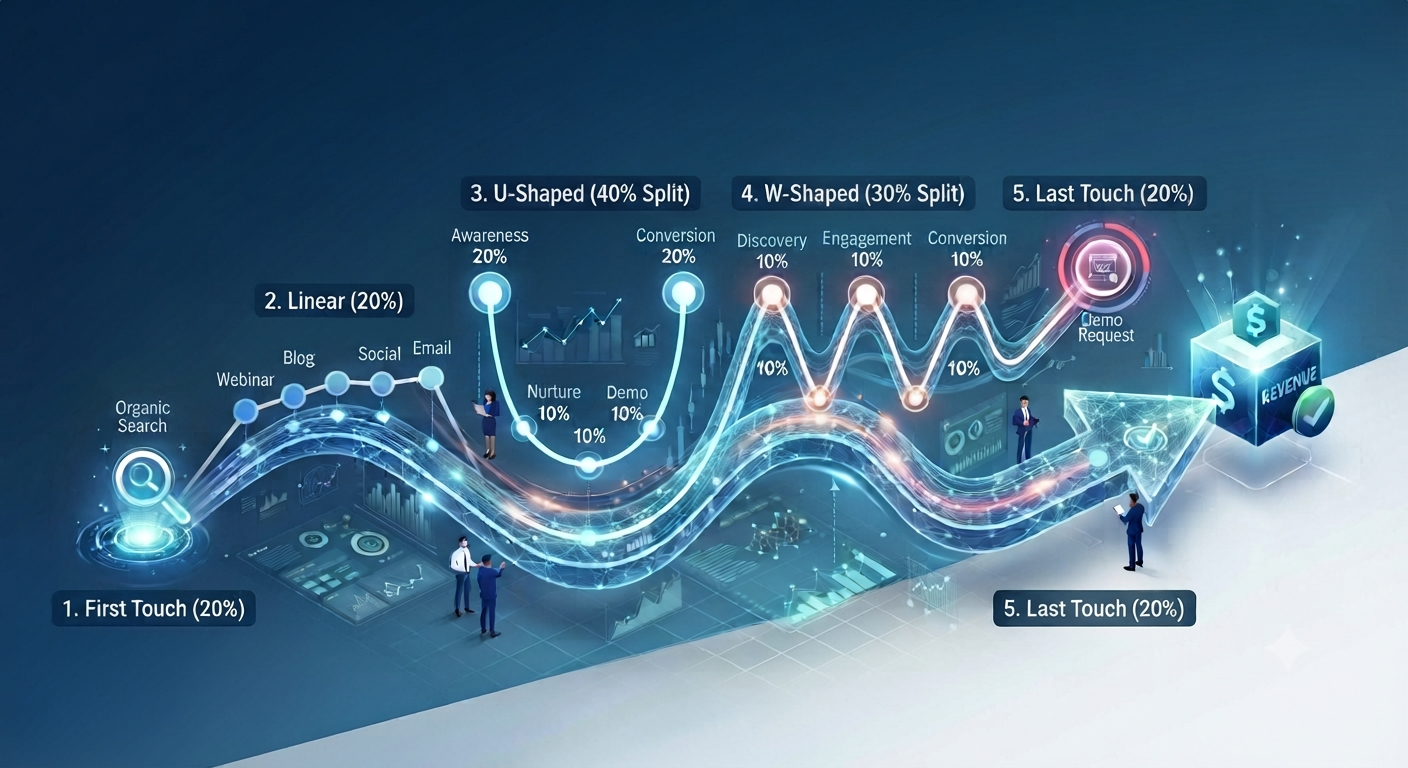

Account-based marketing only works when your message reaches the buying committee across the channels they actually use. Multi-channel ABM blends paid, owned, and earned touchpoints into a coordinated journey that feels helpful, not pushy, and that is how you turn high-value targets into pipeline.
Why Single-Channel ABM Fails in 2026
Modern B2B buying is a group activity with multiple stakeholders, each consuming information differently. A CTO might live on technical blogs and LinkedIn, a CFO scans email and industry reports, and a VP of Sales watches short-form video and attends peer webinars.
When ABM relies on one channel (for example, only LinkedIn ads or only email sequences), it misses large parts of the buying committee and fails to create the “surround sound” effect that builds trust. Research and practitioner guidance consistently show that meaningful engagement in complex deals often requires 8–12 touchpoints across different formats before a prospect responds.
In short, single-channel ABM looks like good outbound, not true account-based marketing. True ABM is orchestration: the display ad, the email, the direct mail, the webinar invite, and the SDR call all tell one coherent story tailored to the account’s priorities.
What Multi-Channel ABM Really Means
Multi-channel ABM is not “use every channel.” It is a deliberate mix of channels chosen based on where your ideal customer profile spends time, sequenced so that each touchpoint builds on the last.
The goal is to create a consistent narrative that:
- Reinforces your core value proposition for that specific account
- Addresses the real business problems your solution solves
- Reduces friction for the buying committee to move forward
This is why multi-channel ABM shortens sales cycles: it reduces uncertainty, increases perceived relevance, and makes your brand feel like a trusted advisor instead of a random vendor.
The Core Channels Buyers Actually Notice
Not all channels are equal. The ones that matter most are those where your buyers already pay attention and where your message can be personalized at the account or stakeholder level.
1. IP-Targeted Display and LinkedIn Advertising (Air Cover)
Paid ads in ABM are rarely about instant lead capture. They act as “air cover” that warms up the account before sales reaches out.
- IP-targeted display lets you serve ads only to employees of your target accounts as they browse industry sites and news.
- LinkedIn account targeting allows you to reach specific job titles and functions within those accounts with tailored creative.
The objective is awareness and validation: when your SDR finally calls, the prospect has already seen your brand framed around their industry problem. For The LeadCrafters, this could mean promoting your B2B lead generation services with case-study style ads that highlight pipeline outcomes for similar companies.
2. High-Value Direct Mail and Personalized Gifts
In a digital-first world, physical touchpoints stand out. Strategic direct mail is one of the highest-converting channels in enterprise ABM when done with intent.
Effective examples include:
- A relevant business book with a handwritten note tied to a specific challenge
- A personalized video mailer that explains your solution in under two minutes
- A curated gift (for example, a premium notebook or tech accessory) linked to a meeting request
The key is timing: follow up immediately after tracking shows delivery, and reference the item in your email and call. This turns a generic “checking in” message into a contextual, human conversation.
3. Content Syndication and Targeted Webinars
Your best content should not live only on your site. Content syndication places deep-dive assets (whitepapers, benchmark reports, playbooks) on third-party sites your buyers already trust.
Pair this with highly targeted webinars:
- Instead of a broad “Best Practices in ABM” session, host an exclusive roundtable for CIOs or CMOs of your top 20 target accounts.
- Use invitation-only positioning and tailor the agenda to their specific pain points.
This creates a perception of exclusivity and relevance, which increases attendance quality and sales-ready conversations. For a domain like The LeadCrafters, this approach aligns naturally with your SEO content marketing and demand generation expertise.
4. Orchestrated Sales Outreach (Email, Phone, Social)
Sales outreach is the tip of the spear, but it must reference the other channels to feel coherent.
Examples of integrated outreach:
- “I noticed your team recently attended our ABM strategy webinar…”
- “I hope you received the book I sent on Tuesday about scaling pipeline in your industry…”
- “Your CTO might find this technical whitepaper relevant given your recent digital transformation initiatives…”
This hyper-personalized cadence creates a seamless buying experience where marketing and sales feel like one team.
5. Retargeting and Sequential Messaging
Retargeting ensures that once someone engages (for example, visits your site, downloads a report, or attends a webinar), they see the next logical message, not the same ad again.
Sequential messaging might look like:
- Ad introducing the core problem and your point of view
- Ad or email with a case study showing results for a similar account
- Invitation to a tailored demo or strategy session
This progression mirrors the buyer’s journey and increases the likelihood of conversion.
A Sample 30-Day Multi-Channel ABM Cadence
To make this concrete, here is how a coordinated multi-channel campaign might look over a 30-day period for a high-value target account.
Days 1–10: Awareness and Framing
- Display ads and LinkedIn sponsored content run continuously, targeting the account’s IP range and key roles. Messaging focuses on the overarching industry problem your solution addresses.
- Publish a supporting blog post on your site about this problem and promote it via organic social and email to your broader audience, reinforcing authority.
Day 11: The Hook
- Send a high-value direct mail piece to the primary decision-maker (for example, a business book or personalized report) with a note referencing their specific context.
Day 14: The Follow-Up
- The SDR sends a personalized email referencing the direct mail piece and the specific industry problem highlighted in the ads. Include a link to a relevant case study or ABM playbook on your site.
Day 16: The Connection
- The SDR sends a customized LinkedIn connection request sharing a relevant asset (for example, a lead generation guide) with no hard pitch.
Days 18–30: The Pursuit
- Run a coordinated mix of phone calls, follow-up emails, and retargeting ads featuring customer stories and proof points designed to secure a meeting.
- Invite key stakeholders to a VIP webinar or roundtable tailored to their role and industry.
- Use content syndication to place a deeper technical or strategic asset on a trusted third-party site, then reference it in outreach.
This cadence creates the perception that your brand is thoughtfully present across the buyer’s journey, not randomly popping up in one channel.
Designing Multi-Channel ABM That Buyers Actually Notice
The difference between “multi-channel noise” and “multi-channel signal” is design. Buyers notice ABM when it feels relevant, timely, and helpful.
Start With Account Research and ICP Clarity
Before selecting channels, clarify:
- Who is in the buying committee for your typical deal?
- What problems are they trying to solve this quarter?
- Where do they consume information (specific sites, communities, events)?
This research informs which channels to prioritize and how to tailor messages.
Map Messages to Stakeholder Roles
Each stakeholder cares about different outcomes:
- Economic buyers (CFO, CEO) care about ROI, risk, and strategic impact.
- Technical buyers (CTO, VP Engineering) care about integration, security, and scalability.
- User buyers (VP Sales, VP Marketing) care about usability, time-to-value, and results.
Craft channel-specific assets that speak to each role while maintaining a unified narrative. For example, a demand generation report might emphasize pipeline metrics for economic buyers and tactical playbooks for user buyers.
Orchestrate, Don’t Just Stack Channels
Orchestration means:
- Timing touchpoints so they build on each other instead of competing.
- Ensuring visual and messaging consistency across ads, emails, landing pages, and sales scripts.
- Using intent data and engagement signals to trigger the next best action.
This is where an integrated tech stack matters: ABM platforms, marketing automation, CRM, and intent data tools must work together to coordinate actions across channels.
Measure What Matters: Engagement, Not Just Clicks
Traditional metrics (clicks, open rates) are insufficient for multi-channel ABM. Focus on:
- Account engagement score: combined interactions across channels per target account
- Meeting velocity: time from first touch to first qualified meeting
- Pipeline contribution: revenue-linked opportunities created from ABM programs
These metrics reflect whether your multi-channel efforts are actually moving accounts through the funnel.
Common Pitfalls to Avoid
Even with the right channels, multi-channel ABM can fail if execution is sloppy.
1. Inconsistent Messaging Across Channels
If your ads promise one thing and your landing page or sales call says something else, trust erodes quickly. Ensure your core value proposition and proof points are consistent everywhere.
2. Overloading Accounts With Too Many Touchpoints
More is not always better. Bombarding an account with daily emails, ads, and calls feels spammy. Focus on quality, relevance, and spacing of touchpoints.
3. Ignoring Sales and Marketing Alignment
Multi-channel ABM breaks down when marketing and sales operate in silos. Regular syncs, shared dashboards, and joint planning sessions are essential to keep the narrative coherent.
4. Treating ABM as a One-Off Campaign
ABM is a strategy, not a single campaign. Sustainable results come from ongoing optimization, learning from each account’s response, and refining your channel mix over time.
How The LeadCrafters Can Help You Execute Multi-Channel ABM
For B2B teams struggling to turn ABM into measurable pipeline, The LeadCrafters offers a focused, execution-ready approach.
- ICP and account research: Define and prioritize your highest-value targets with clear buyer maps.
- Multi-channel campaign design: Build coordinated sequences across email, LinkedIn, content, and ads that align with your buyer’s journey.
- SEO-optimized content for ABM: Create blog content, whitepapers, and landing pages that support your ABM narrative and rank for high-intent keywords.
- Sales and marketing alignment: Implement processes and dashboards that keep both teams synchronized around account outcomes.
This end-to-end support ensures your multi-channel ABM is not just a collection of tactics, but a coherent growth engine.