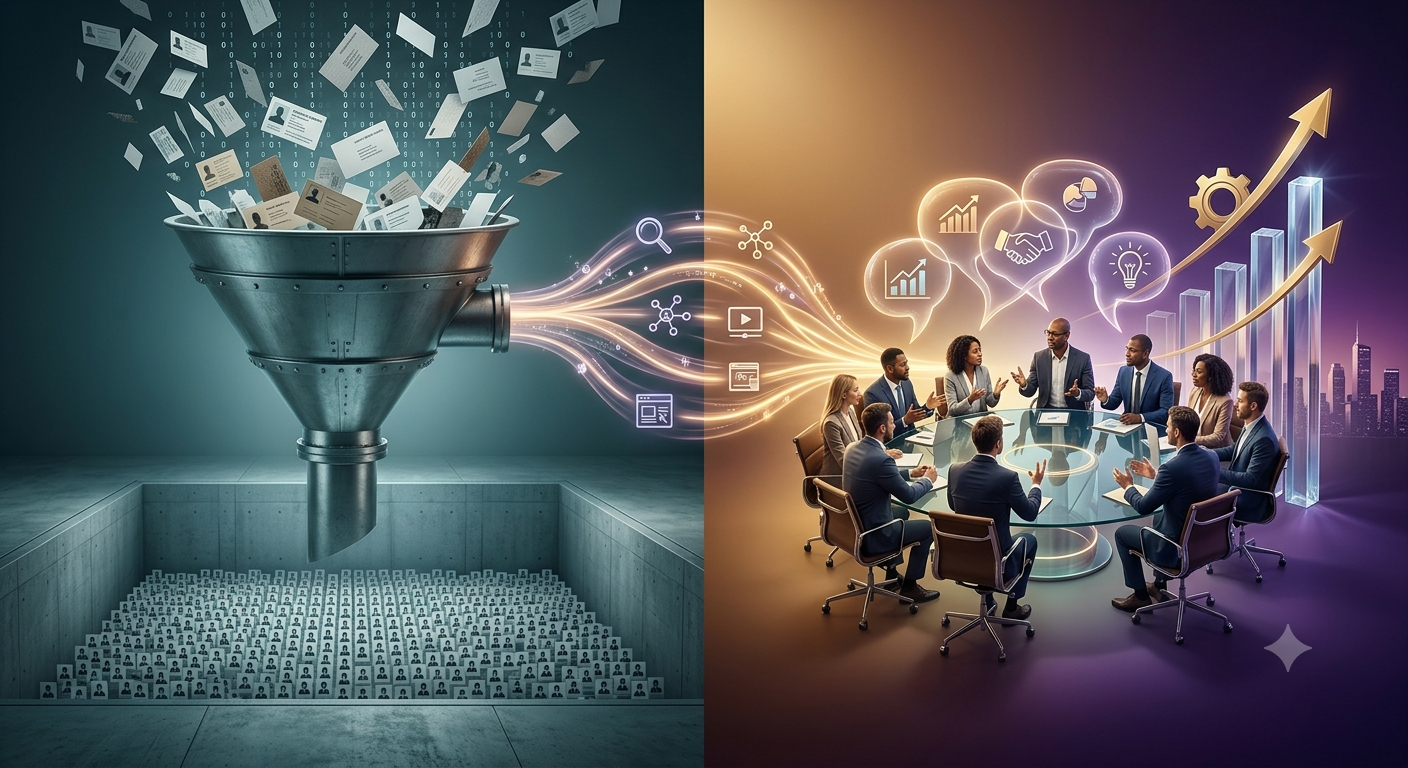

In 2026, B2B buyers complete most of their research before ever speaking to sales, which means the old playbook of collecting contacts and pushing demos no longer drives predictable pipeline. Winning teams now treat engagement as a continuous, signal-led journey that moves accounts from anonymous visitors to active conversations across email, LinkedIn, website, and events.
This article outlines a practical framework to rethink B2B engagement for SEO and revenue impact, with tactics you can implement immediately to turn more contacts into qualified conversations.
Why the Contacts-to-Conversations Shift Matters Now
For years, B2B marketing measured success by the number of contacts added to the database. More emails meant more nurture sequences, more webinars, and more MQLs. But as buying committees grow and buyers become more self-directed, contact volume has decoupled from revenue.
Modern buyers use AI, search, social content, and peer recommendations to evaluate vendors long before they fill out a form. Around three in four B2B buyers now finish their journey in 12 weeks or less, often with minimal direct vendor interaction until late in the process. If your engagement strategy is built around capturing contacts first and starting conversations later, you are likely missing the window where buyers are most open to discovery.
The shift from contacts to conversations means:
- Prioritizing meaningful interactions over raw form fills
- Engaging multiple stakeholders across the buying committee, not just one champion
- Using intent and behavioral signals to time outreach when buyers are actively researching
- Designing journeys that blend B2B customer journey stages with real-time digital experiences
The Limits of Traditional Contact-Centric B2B Marketing
Most legacy B2B engagement models follow a simple pattern: attract traffic, gate content, capture contact details, then nurture via email. While this still works for some use cases, it creates several problems in 2026:
1. Over-reliance on gated content
Heavy gating slows down discovery and pushes buyers toward ungated alternatives. In 2026, high-performing teams increasingly ungate thought leadership and use lighter friction offers (tools, templates, assessments) to start conversations.
2. Single-threaded relationships
Engaging one contact per account ignores the reality of multi-stakeholder buying. Modern organizations rely on dynamic groups of buyers including influencers, researchers, end users, and economic decision makers. If only one person is “in conversation,” deals stall when that person changes roles or loses influence.
3. Static lead scoring
Traditional lead scoring based on demographic fit and a few behavioral ticks cannot keep up with fast-moving buying signals like job changes, funding rounds, or product evaluations. Signal-based selling is replacing static scoring as the operational standard for high-performing pipeline programs.
4. Channel silos
Email-only nurture, LinkedIn-only SDR outreach, and website-only content create fragmented experiences. Buyers expect consistent, coordinated messaging across channels as they move between research, evaluation, and purchase.
To move from contacts to conversations, you need a new engagement architecture.
A New Engagement Architecture for 2026
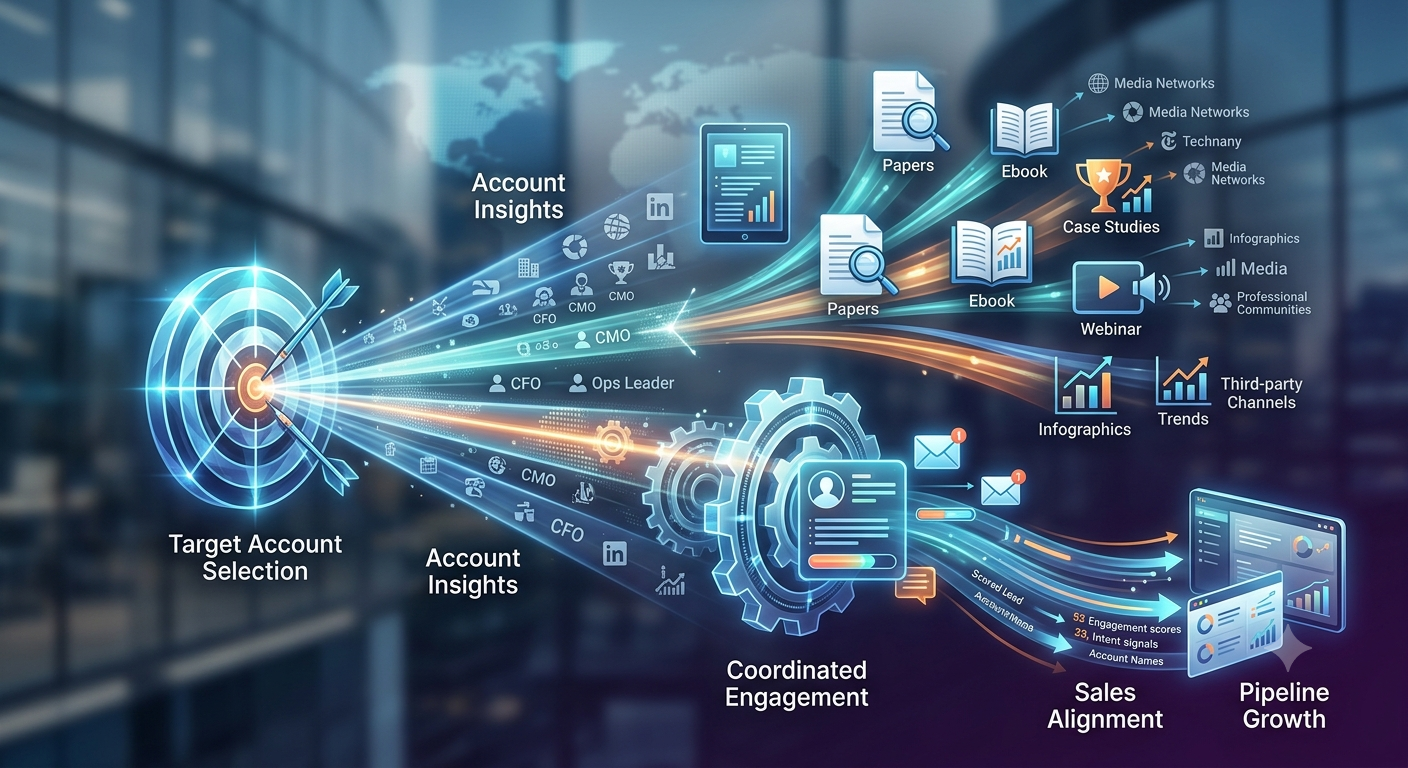
Think of engagement as four layers that work together:
- Data layer – clean ICP-aligned accounts and contacts, enriched with intent and behavioral signals
- Signal layer – triggers such as website visits, content consumption, job changes, event activity, and product usage
- Orchestration layer – coordinated sequences across email, phone, LinkedIn, ads, and website personalization
- Conversation layer – human-led interactions (calls, meetings, workshops) that convert interest into pipeline
This model aligns closely with modern B2B lead generation best practices that emphasize precision targeting, multi-channel outreach, and speed-to-lead.
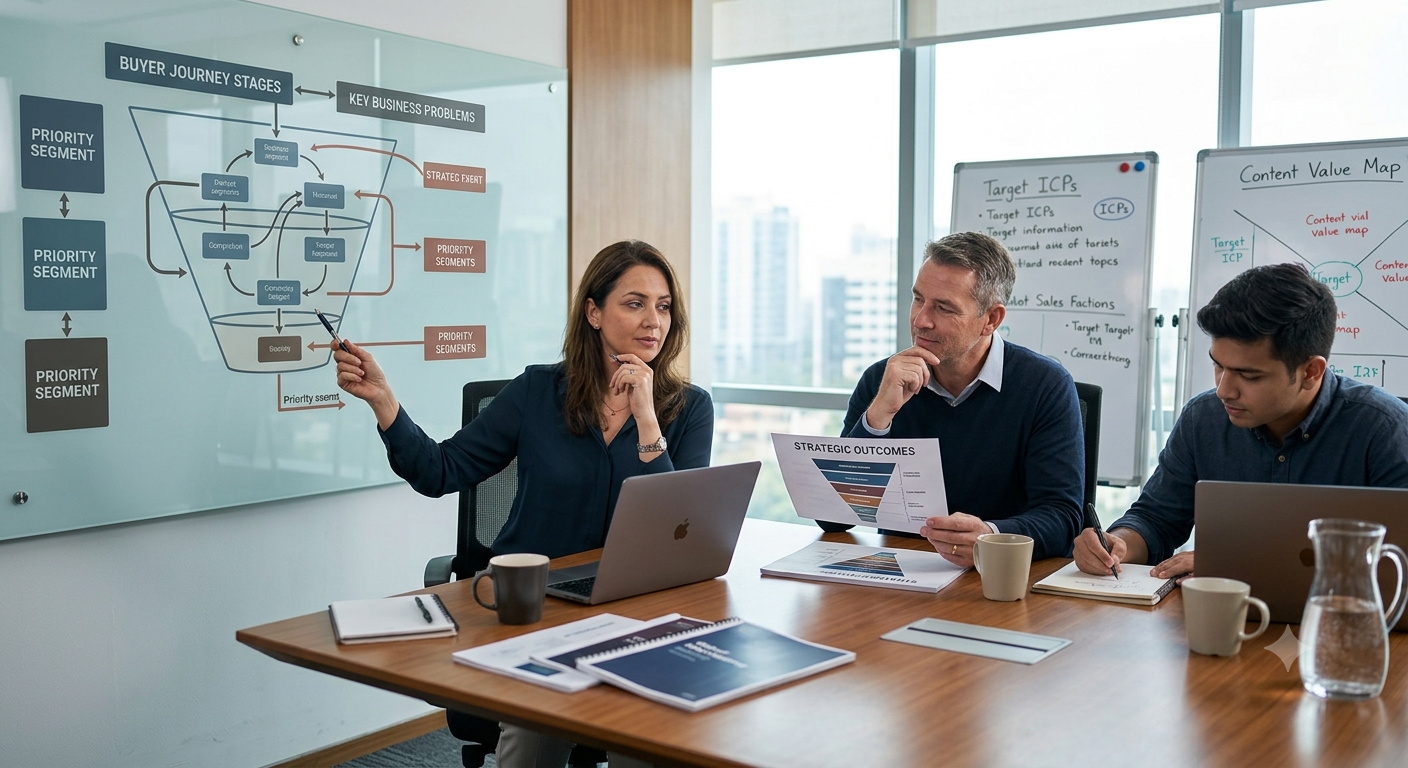
Step 1: Redefine Your ICP and Buying Committee
Before rethinking engagement, clarify who you are trying to engage. In 2026, ICP definition must go beyond industry and company size to include:
- Specific sub-segments and use cases where you win most often
- Roles and functions that appear repeatedly in won deals
- Buying triggers such as funding events, leadership changes, or tech stack shifts
Once your ICP is clear, map the typical buying committee for each segment. For example, a RevOps tool might engage:
- VP/Director of Revenue Operations (economic buyer)
- Sales Operations Manager (technical evaluator)
- Front-line sales reps (end users)
- CFO or finance leader (budget approver)
Content and outreach should then be tailored to each role’s priorities, objections, and success metrics. This role-specific approach is a core pillar of modern B2B lead generation strategies.
Step 2: Build a Signal-Rich Engagement Database
Contacts alone are not enough. You need a database that tells you when and how to engage. Key elements include:
First-party data
Use your website analytics, CRM fields, product usage data, and event registrations to understand how accounts behave over time. Leverage this data to adapt experiences each time a logged-in buyer returns.
Intent data
Layer in third-party intent signals (topic-level research, competitor comparisons, category searches) to identify accounts actively evaluating solutions. This data feeds ABM targeting, LinkedIn retargeting, and sales sequences triggered by specific behaviors.
Behavioral signals
Track high-intent actions such as:
- Repeated visits to pricing or integration pages
- Download of comparison guides or ROI calculators
- Attendance at webinars or live events
- Engagement with LinkedIn posts or newsletters
These signals help you prioritize accounts that are moving from passive contacts to active conversations.
Step 3: Design Multi-Channel, Signal-Led Sequences
Once you have the right accounts and signals, design coordinated outreach that feels helpful, not spammy. In 2025–2026, multi-channel outreach (email + phone + LinkedIn) can cut cost per lead by roughly 31% versus single-channel campaigns.
Example signal-led sequence
Suppose an ICP-fit account shows these signals:
- Marketing director visits your pricing page twice in one week
- Two team members register for your webinar
- The company announces a new funding round
A signal-led sequence might look like:
- Day 1: SDR sends a short, personalized LinkedIn connection request referencing the funding news and a relevant use case.
- Day 2: Email from an AE with a one-page benchmark report tailored to their industry and a soft CTA to discuss findings.
- Day 4: Retargeting ads on LinkedIn showing customer stories from similar companies.
- Day 7: SDR call referencing the webinar attendance and offering a tailored demo or workshop.
- Day 10: Follow-up email with a case study and a clear “book a conversation” CTA.
This approach embodies B2B lead generation in 2026 best practices: signal-based outreach, multichannel sequencing, and content that fuels outbound.
Step 4: Make Your Website a Conversation Engine
Your website should do more than capture contacts; it should start conversations. Tactics include:
Ungated thought leadership
Publish high-value reports, playbooks, and benchmarks without gates to attract early-stage researchers. Use lighter friction CTAs (e.g., “Get the spreadsheet” or “Run the calculator”) to start two-way interactions.
Interactive tools and assessments
ROI calculators, maturity assessments, and configuration tools invite visitors to engage actively. Capture minimal contact info up front, then use progressive profiling to deepen the conversation over time.
Personalized experiences
Use account-based website personalization to show relevant case studies, integrations, and CTAs based on visitor attributes and behavior. This aligns with the broader shift to digital-first, personalized B2B buying experiences.
Clear conversation CTAs
Replace generic “Contact us” forms with specific conversation offers:
- “Book a 20-minute strategy session”
- “Join our next live teardown workshop”
- “Talk to a specialist about your stack”
These CTAs position your team as advisors, not just vendors.
Step 5: Align Marketing and Sales Around Conversations
Moving from contacts to conversations requires tight alignment between marketing and sales. Key practices include:
Shared definitions
Agree on what counts as a “conversation” (e.g., qualified meeting, workshop attendance, discovery call) and how these map to pipeline stages.
Joint planning
Run quarterly planning sessions where marketing and sales review:
- Which accounts and segments are most engaged
- Which signals correlate with meetings and wins
- Which content and channels drive the highest-quality conversations
Coordinated follow-up
Ensure that every signal-triggered touch has a clear owner and next step. For example, if marketing runs a webinar for target accounts, sales should have a pre-defined follow-up sequence for attendees and no-shows.
This alignment is essential for modern B2B lead generation playbooks that integrate SEO, content, paid, and sales outreach.
Step 6: Measure What Matters: Conversations, Not Just Contacts
Shift your KPIs from contact-centric metrics to conversation-centric metrics:
Conversation metrics
- Number of qualified meetings booked from target accounts
- Percentage of ICP accounts with at least one active conversation per quarter
- Time from first signal to first conversation
- Multi-threading rate (number of stakeholders engaged per account)
Pipeline metrics
- Pipeline created from engaged vs. non-engaged accounts
- Win rate and deal size for accounts with multi-channel engagement
- Sales cycle length for signal-led vs. traditional outreach
These metrics help you prove the revenue impact of rethinking engagement and justify investment in data, content, and orchestration.
Common Pitfalls to Avoid
As you redesign your engagement strategy, watch out for these traps:
1. Over-automating conversations
Automation should support, not replace, human interaction. Use sequences to set context and earn the right to a conversation, but avoid long, impersonal email chains that never lead to a call.
2. Ignoring mid-funnel engagement
Many teams focus heavily on top-of-funnel content and bottom-of-funnel demos, but skip the middle. Create role-specific workshops, peer roundtables, and implementation guides that keep accounts engaged as they evaluate options.
3. Chasing too many signals
Not every website visit or content download deserves an immediate sales touch. Prioritize high-intent signals and ICP-fit accounts to avoid burning out SDRs and annoying buyers.
4. Neglecting post-sale conversations
Engagement should not stop at closed-won. Onboarding workshops, QBRs, and customer advisory boards turn customers into advocates and sources of expansion revenue.
Putting It Into Practice: A 90-Day Plan
To operationalize the contacts-to-conversations shift, consider a 90-day rollout:
Days 1–30: Foundation
- Audit current ICP definitions and buying committee maps
- Clean and enrich your account and contact data
- Identify top 3–5 high-intent signals to track
Days 31–60: Orchestration
- Design 2–3 signal-led, multi-channel sequences for priority segments
- Update website CTAs to emphasize conversations over contacts
- Launch at least one ungated flagship asset to attract early-stage researchers
Days 61–90: Alignment and Optimization
- Align marketing and sales on conversation definitions and handoff processes
- Implement conversation-focused dashboards in your CRM and marketing automation
- Review results, refine signals, and iterate sequences based on meeting and pipeline outcomes
Final Thoughts: Engagement as a Revenue Discipline
Rethinking B2B engagement is not just a marketing exercise; it is a revenue discipline. In a world where buyers are self-directed, multi-threaded, and signal-driven, the companies that win will be those that can consistently turn anonymous interest into human conversations at the right time, with the right stakeholders, through the right channels.
By shifting from a contacts-first mindset to a conversations-first architecture, you can build a more predictable pipeline, shorten sales cycles, and create experiences that buyers actually value. That is the future of B2B engagement in 2026 and beyond.
If you want help translating this framework into SEO-optimized content, landing pages, or campaign assets for your own B2B brand, The LeadCrafters specializes in turning strategic ideas into publish-ready, revenue-focused content.