
B2B databases used to be treated like static contact lists. Today, intent data changes them into active, decision-making assets that help sales and marketing teams prioritize the right accounts at the right time.
Introduction
For years, B2B teams relied heavily on firmographic data, job titles, industry, company size, and location to build outreach lists. That approach still matters, but it no longer tells the full story. A company may look like a perfect fit on paper and still be far from buying.
Intent data fills that gap by showing what prospects are researching, comparing, and engaging with online. When combined with a database, it helps marketers move from broad targeting to buyer-aware targeting. That shift can improve lead quality, sales alignment, and campaign efficiency.
What intent data means
Intent data refers to signals that indicate a company or contact is actively researching a solution, problem, or category. These signals can come from your own website activity, content engagement, ad interactions, and third-party sources that track research behavior across the web.
In practical terms, intent data helps answer questions like: Which accounts are showing interest now? Which topics are they exploring? Which buyers are likely to enter a sales conversation soon?
That is why intent data has become central to modern B2B database strategy, especially for teams using account-based marketing, lead scoring, and segmentation. A useful overview of how intent data supports targeting and prioritization can be found in Demandbase’s intent data guide.
Why databases are changing
Traditional B2B databases are built around static attributes. They tell you who a company is, but not what it is doing right now. Intent data makes the database dynamic by adding behavioral context.
This changes how teams use records in three important ways:
- It improves prioritization by highlighting accounts with active research behavior.
- It supports segmentation by grouping companies based on topic interest, not only demographic fit.
- It increases personalization by helping teams match messaging to the buyer’s current concerns.
Instead of treating every contact in a list the same, marketers can focus resources on accounts that are more likely to respond. That makes the database more useful for both outbound sales and inbound demand generation.
Better lead scoring
One of the biggest shifts comes in lead scoring. Traditional scoring models often rely too much on demographic data and basic engagement such as opens or clicks. Intent data adds a stronger buying signal.
When a company repeatedly researches related topics, visits high-value pages, or consumes content across multiple sources, that activity can raise its score faster than a single form fill. This allows sales teams to spend time on prospects that are much closer to a purchase decision.
It also reduces wasted effort. A lead may match the ideal customer profile but show no current interest, while another lead from a smaller company may be actively comparing solutions. Intent data helps the database reflect that difference.
Smarter segmentation
Intent data allows segmentation based on behavior and interest. That means your B2B database can be organized around live buying topics instead of only firmographics.
For example, you might segment accounts by interest in:
- Demand generation.
- Marketing automation.
- Data hygiene.
- Lead scoring.
- Sales and marketing alignment.
This type of segmentation is more useful than broad lists like “technology companies” or “mid-market firms.” It lets your team create content and campaigns that match the stage and intent of each account. If you want to build this into a broader lead generation strategy, The Lead Crafters has a helpful related resource on lead generation services.
Stronger personalization
Personalization becomes much more effective when intent data is tied to database records. Instead of sending the same email sequence to every contact in a segment, teams can tailor outreach based on what a company is researching.
For example, if an account is consuming content about lead scoring, your message can focus on sales qualification and funnel efficiency. If another account is researching data hygiene, your message can address database cleanup, enrichment, and CRM accuracy.
This works across channels too. Website CTAs, ad creative, landing pages, and sales follow-ups can all reflect the topic the buyer is actively exploring. That level of relevance usually improves engagement and response rates.
Better sales timing
Timing matters in B2B outreach. Even a highly relevant message can fail if it arrives too early. Intent data helps teams identify when an account is in-market, which improves sales timing.
Instead of cold outreach based only on list matching, sales can prioritize accounts showing active buying behavior. This means fewer generic calls and more conversations with context. It also helps marketing know when to send the next offer, guide, or case study.
The result is a more efficient pipeline. Sales spends less time chasing uninterested contacts, and marketing spends less budget pushing messages to accounts that are not ready.
First-party and third-party signals
Intent data usually comes from two sources: first-party and third-party. First-party intent includes behavior on your own digital properties, such as website visits, content downloads, webinar attendance, and repeat engagement. Third-party intent comes from outside sources that track research activity across publisher networks, review sites, and other online properties.
Both matter, but they serve different purposes. First-party signals show who is already interacting with your brand. Third-party signals help identify prospects before they reach your site.
Used together, they make a database far more powerful. First-party data helps confirm and deepen interest, while third-party data helps uncover new opportunities earlier in the buying journey. For a broader explanation of buyer behavior signals, see Leadfeeder’s intent data overview.
Impact on account-based marketing
Account-based marketing depends on choosing the right accounts and then engaging them with the right message. Intent data makes that process much more accurate.
Instead of targeting accounts only because they fit a firmographic profile, teams can focus on those showing current interest in relevant topics. That allows ABM programs to become more responsive and more personalized.
It also improves coordination between sales and marketing. Both teams can work from the same intent-informed database, which makes follow-up more consistent and reduces wasted effort. That shared visibility is especially useful when multiple stakeholders from the same account are researching similar topics.
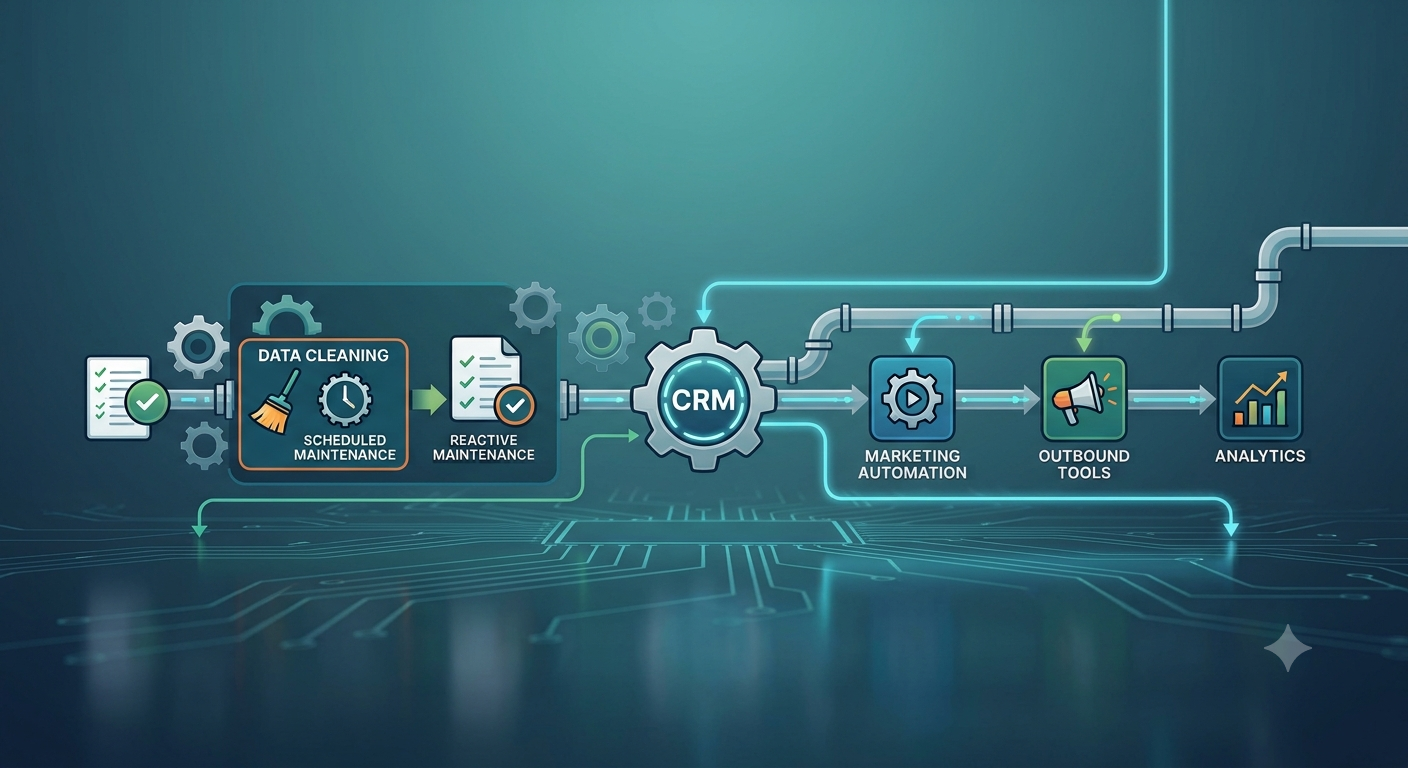
Database hygiene and enrichment
Intent data also changes how teams think about database quality. A database that is technically complete may still be weak if it is not current, relevant, or behavior-aware.
By adding intent signals, teams can enrich records with useful context. That may include topic interest, engagement level, account temperature, or likely buying stage. These additions make the database more actionable for campaign planning and sales outreach.
It also helps identify stale records. If an account has not shown any meaningful engagement for months, the team can deprioritize it. If another account suddenly starts researching high-intent topics, it can move up the queue. In this sense, intent data improves both database accuracy and database usefulness.
SEO and content strategy
Intent data does not only help sales and CRM teams. It also improves SEO content planning. When you know what buyers are searching for, reading, and comparing, you can create content that matches real demand.
That means your database and your SEO strategy can work together. Intent insights reveal which topics deserve new blog posts, landing pages, comparison pages, and gated assets. Over time, this creates a stronger connection between organic traffic and qualified lead capture.
For example, if your audience is showing interest in database quality, buyer intent, and lead scoring, you can build a content cluster around those topics and use it to attract more relevant traffic. This is especially useful for B2B companies that want search visibility and pipeline impact at the same time.
Common mistakes to avoid
Intent data is powerful, but it works best when used carefully. One common mistake is treating every signal as an immediate buying signal. Not every content visit means a prospect is ready to talk.
Another mistake is relying on intent data without clean database structure. If records are incomplete, duplicated, or outdated, the signal value drops quickly. Intent only works well when the underlying database is organized.
A third mistake is using intent in isolation. It should support firmographic data, technographic data, and human judgment, not replace them. The strongest results usually come from combining all three.
How to use it well
The best way to use intent data in B2B databases is to make it part of your workflow, not just a reporting layer. Start by identifying the intent topics that align with your product or service. Then connect those topics to segmentation, scoring, outreach, and content planning.
From there, build simple rules for action. For example, if an account shows repeated intent on a high-value topic, route it to sales. If a contact shows light intent, place them into an educational nurture stream. If a segment is inactive, lower its priority.
That process helps your database become a living system rather than a static list. It also makes your marketing more responsive to real buyer behavior.
Conclusion
Intent data changes the way B2B databases are used by turning static contact records into active buying intelligence. It helps teams score leads better, segment more accurately, personalize outreach, and focus on accounts that are actually in motion.
For B2B companies, that shift is a major advantage. A database enriched with intent data does not just store contacts, it helps reveal where demand is building and where sales should focus next.