

For more than a decade, digital marketing has depended heavily on third-party cookies, behavioral tracking, and purchased databases to understand customers. That era is rapidly changing.
Privacy regulations, stricter browser policies, and growing customer awareness about data collection have forced organizations to rethink how they gather and use customer information. At the same time, businesses still need highly personalized marketing experiences to compete in increasingly crowded markets.
This challenge has introduced one of the most important trends in modern B2B marketing:
Zero-party data.
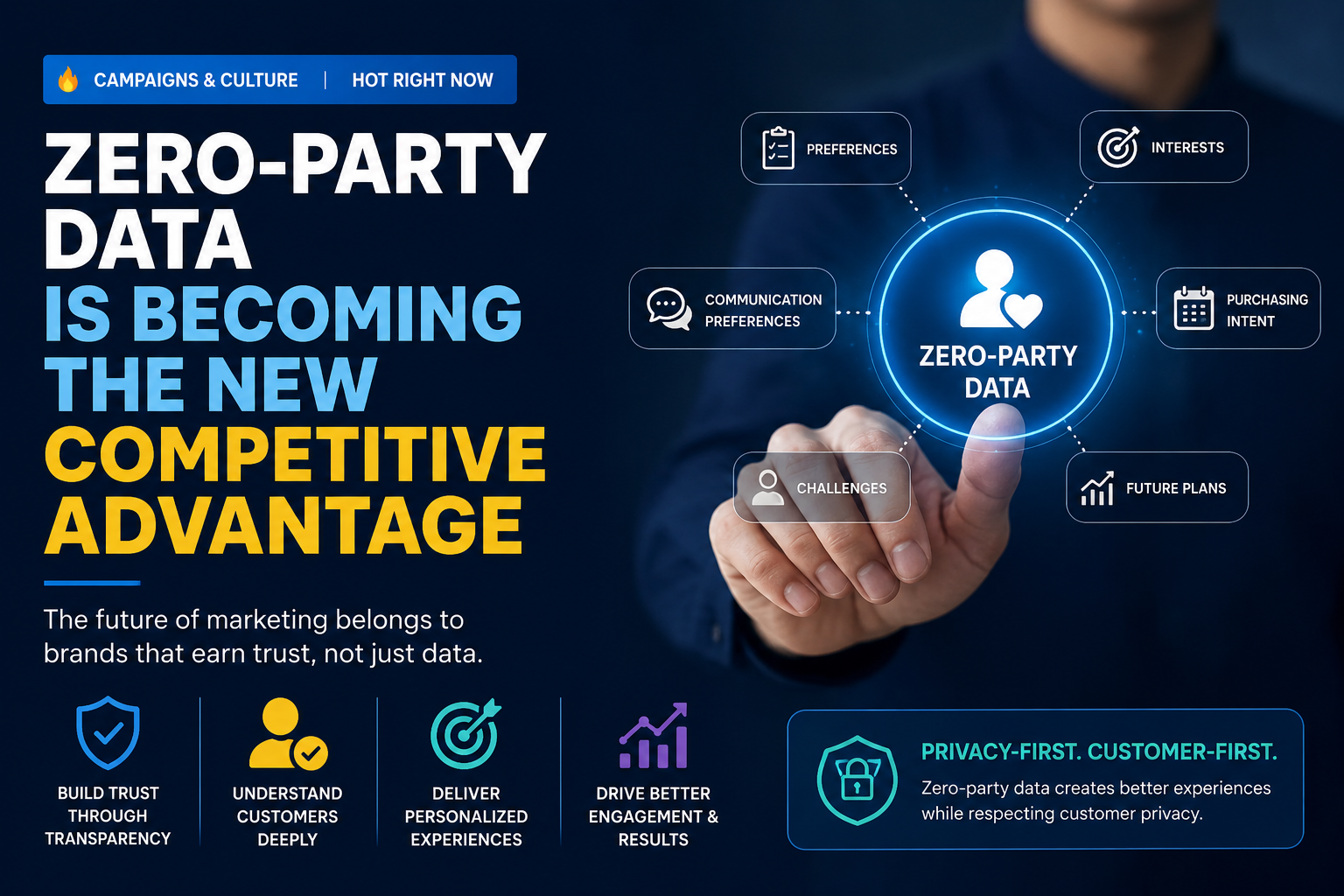
Unlike data collected without customers fully realizing it, zero-party data is intentionally and willingly shared by customers themselves. It includes their preferences, interests, buying intentions, challenges, communication preferences, and future plans.
Instead of guessing what buyers want, companies can simply ask and customers are increasingly willing to answer when they receive meaningful value in return.
Today, zero-party data is no longer just a privacy-friendly practice. It has become a genuine competitive advantage for organizations that want to deliver better customer experiences while maintaining trust.
What Is Zero-Party Data?
Zero-party data refers to information that customers voluntarily provide to a company.
Examples include:
- Product interests
- Budget ranges
- Business challenges
- Preferred communication channels
- Industry information
- Future purchasing timelines
- Content preferences
- Survey responses
- Webinar registrations
- Assessment results
- Interactive quiz answers
- Event registration details
Unlike behavioral tracking, zero-party data comes directly from the customer without requiring inference.
Understanding Different Types of Marketing Data
| Data Type | Source | Example | Accuracy |
|---|---|---|---|
| First-Party Data | Website analytics, CRM, purchase history | Page visits, downloads | High |
| Second-Party Data | Trusted business partner | Shared audience insights | Medium–High |
| Third-Party Data | External vendors | Purchased contact lists | Variable |
| Zero-Party Data | Directly from customers | Preferences, goals, buying plans | Very High |
Why Everyone Is Talking About Zero-Party Data
Several market shifts are driving its rapid adoption.
1. Privacy Regulations
Regulations like GDPR, CCPA, and similar global privacy laws have increased the importance of transparent data collection practices.
Customers now expect to know:
- Why data is collected
- How it will be used
- How long it will be stored
- Whether they can delete it
Zero-party data naturally aligns with these expectations because it is shared voluntarily.
2. The End of Third-Party Cookies
Major browsers have already limited or eliminated many forms of cross-site tracking.
This means marketers can no longer depend on anonymous behavioral tracking for campaign targeting.
Instead, customer-declared preferences become significantly more valuable.
3. AI Needs Better Data
Artificial intelligence only performs well when trained on quality information.
Guessing customer interests from browsing behavior is less effective than receiving direct responses such as:
“I’m planning a cloud migration in the next six months.”
That single statement is far more valuable than dozens of inferred signals.
Why Zero-Party Data Improves Marketing Performance
Organizations that embrace zero-party data often experience improvements across several areas.
Better Personalization
Instead of generic email campaigns, marketers can deliver:
- Industry-specific newsletters
- Role-based recommendations
- Product-specific resources
- Personalized webinar invitations
Customers receive content they actually requested.
Higher Email Engagement
Personalized campaigns generally outperform broad email blasts because they match declared interests rather than assumptions.
Example:
Instead of sending cybersecurity content to everyone,
A marketer sends:
- Cloud Security Guide
- AI Security Checklist
- Data Governance Whitepaper
only to subscribers who selected those topics.
The result:
- Higher open rates
- More clicks
- Better lead quality
- Lower unsubscribe rates
Better Lead Qualification
Zero-party data allows marketing teams to qualify prospects before sales conversations even begin.
Instead of asking sales representatives to discover:
- Budget
- Timeline
- Current challenges
- Company priorities
marketers can collect this information during:
- Content downloads
- Assessments
- Registration forms
- Interactive surveys
Sales teams begin conversations with far richer context.
Zero-party data enables personalized customer journeys based on explicit preferences rather than inferred behavior.
Practical Ways Companies Collect Zero-Party Data
Leading brands aren’t relying on lengthy forms. Instead, they create engaging experiences.
Interactive Quizzes
Examples include:
- Which CRM is right for your business?
- What’s your marketing maturity level?
- Assess your cybersecurity readiness.
Customers enjoy receiving personalized recommendations.
Businesses gain valuable customer insights.
Preference Centers
Subscribers choose:
- Email frequency
- Preferred topics
- Product categories
- Industries
- Content formats
Everyone benefits.
Surveys
Short surveys after webinars or downloads help companies understand:
- Current priorities
- Future investments
- Business objectives
- Pain points
Calculators
Examples:
- ROI Calculator
- Cost Savings Calculator
- Cloud Migration Estimator
- Lead Generation Calculator
Users receive useful results.
Companies receive highly relevant intent signals.
Webinar Registration
Registration forms often include:
- Job title
- Company size
- Primary challenge
- Current software
- Planned investment
These responses help personalize future engagement.
Video Placement
Recommended YouTube Video
HubSpot: First-Party Data Strategy Explained
Place this video after the section above to help readers understand the evolution from third-party to zero-party data.
How Zero-Party Data Supports ABM
Account-Based Marketing depends on relevance.
Instead of treating every decision-maker equally, zero-party data allows teams to tailor messaging for each stakeholder.
For example:
| Role | Shared Preference | Personalized Content |
|---|---|---|
| CIO | Security | Cybersecurity Guide |
| CFO | ROI | Cost Reduction Report |
| Marketing Director | Automation | AI Marketing Webinar |
| IT Manager | Cloud | Infrastructure Checklist |
Every stakeholder receives information aligned with their priorities.
Building Trust Through Transparency
Trust has become one of marketing’s most valuable assets.
Customers appreciate companies that clearly explain:
- Why information is collected
- How it improves customer experience
- How data is protected
- How preferences can be updated
Transparency encourages more customers to share useful information.
Common Mistakes Companies Make
Asking Too Many Questions
Lengthy forms discourage completion.
Collect information gradually.
Offering No Value
Customers won’t provide information unless they receive something meaningful in return.
Offer:
- Exclusive reports
- Industry research
- Benchmark studies
- Templates
- Checklists
- Personalized recommendations
Never Using the Data
One of the biggest mistakes is collecting preferences but continuing to send generic campaigns.
Customers notice.
Failing to Update Preferences
Business priorities change.
Preference centers should allow users to update their interests anytime.
The Technology Behind Zero-Party Data
Several marketing platforms now support zero-party data strategies.
Popular tools include:
- HubSpot
- Salesforce
- Marketo
- Eloqua
- Adobe Experience Platform
- Customer Data Platforms (CDPs)
- Interactive survey tools
- Marketing automation platforms
When integrated with CRM systems, these platforms enable dynamic audience segmentation and personalized journeys.
Future Trends
Industry analysts predict several developments:
AI-Powered Personalization
AI will automatically tailor content based on declared customer preferences.
Progressive Profiling
Instead of asking ten questions today,
companies will ask one relevant question during each interaction.
Customer profiles become richer over time.
Interactive Experiences
Expect greater use of:
- Assessments
- Product selectors
- Configurators
- Recommendation engines
- Buying readiness quizzes
Privacy-First Marketing
Organizations that prioritize transparency will continue earning stronger customer trust.
Key Takeaways
Zero-party data isn’t replacing first-party data. It’s enhancing it.
When businesses combine behavioral insights with information customers intentionally share, marketing becomes more accurate, more relevant, and more trustworthy.
The companies that succeed in the coming years won’t necessarily have the biggest databases. They’ll have the most meaningful relationships with their audiences.
By focusing on customer consent, transparency, and value exchange, marketers can create campaigns that respect privacy while delivering exceptional personalization.
In a world where trust is becoming increasingly difficult to earn, zero-party data may be the strongest competitive advantage a business can build.
Conclusion
The shift toward privacy-first marketing marks one of the most significant changes in digital marketing over the past decade. As third-party cookies fade and consumers demand greater control over their personal information, organizations must adopt strategies that prioritize trust and transparency.
Zero-party data offers a sustainable path forward. Rather than relying on assumptions or hidden tracking, businesses can build stronger relationships by inviting customers to share their goals, preferences, and intentions willingly. This not only improves personalization but also increases campaign performance, lead quality, and long-term customer loyalty.
For B2B marketers, publishers, and demand generation teams, the message is clear: the future belongs to organizations that create genuine value in exchange for customer insights. Investing in interactive experiences, preference centers, surveys, and personalized content today will help build a more resilient marketing strategy tomorrow.
Zero-party data is no longer just a trend. It’s becoming the foundation of modern, ethical, and high-performing marketing.