

The B2B marketing landscape continues to evolve at an incredible pace. Over the past month, several high-profile campaigns, product launches, thought leadership initiatives, and creative activations have demonstrated one clear reality: successful B2B marketing is no longer about generating leads alone, it’s about creating memorable experiences, building trust, and accelerating revenue through data-driven storytelling.
From AI-powered personalization and executive thought leadership to creator partnerships and integrated omnichannel campaigns, the biggest names in B2B marketing have shifted their focus from selling products to building communities and long-term customer relationships.
This month’s campaigns reveal an important lesson for every B2B marketer: buyers expect consumer-grade experiences, personalized communication, and authentic expertise throughout the buying journey.
Let’s examine the biggest lessons marketers can learn from recent B2B campaigns and how businesses can apply these strategies to improve their own demand generation efforts.
Campaign Landscape This Month
Several major developments shaped B2B marketing conversations over the past few weeks:
- AI became central to campaign planning rather than simply content creation.
- Video-first storytelling continued to outperform static content.
- Executive thought leadership gained even greater importance.
- Creator partnerships expanded into enterprise marketing.
- LinkedIn introduced new initiatives aimed at helping business advertisers create more effective campaigns and scale video-driven engagement.
- Discussions at major industry events emphasized measurable business growth over vanity marketing metrics, with marketing leaders highlighting AI as a productivity tool rather than a replacement for creativity.


The Biggest Lesson:
Marketing Is Becoming a Revenue Function
Perhaps the biggest takeaway this month is that marketing teams are increasingly being evaluated on business outcomes rather than marketing outputs.
Instead of measuring:
- Email opens
- Website traffic
- Social impressions
Organizations now prioritize:
- Qualified pipeline
- Revenue influenced
- Buying committee engagement
- Sales velocity
- Customer expansion
Industry leaders are increasingly describing marketing as a growth engine integrated with sales, customer success, and operations rather than a standalone department.
Lesson 1:
AI Should Improve Strategy, Not Replace Creativity
Nearly every major campaign this month incorporated AI in some way.
However, the strongest campaigns used AI for:
- Audience segmentation
- Predictive targeting
- Content recommendations
- Performance optimization
- Workflow automation
Instead of:
- Publishing generic AI-generated blogs
- Mass-producing identical ads
- Replacing human storytelling
Marketing leaders repeatedly emphasized that AI works best when it enhances creativity rather than replacing it.
Lesson 2:
Thought Leadership Outperformed Product Marketing
Another trend dominating this month was executive visibility.
Companies that invested in:
- CEO videos
- Founder interviews
- LinkedIn articles
- Industry podcasts
- Webinar appearances
Generated significantly stronger engagement than traditional product announcements.
Modern buyers increasingly trust people over brands.
When executives consistently share insights, they create credibility long before prospects speak with sales.
Lesson 3:
Video Is Becoming the Primary B2B Content Format
Video continues to dominate engagement.
The strongest campaigns featured:
- 30-second LinkedIn videos
- Product walkthroughs
- Customer success stories
- Event highlights
- Executive interviews
- Educational explainers
LinkedIn itself is expanding video-focused advertising products as demand for business video content grows.
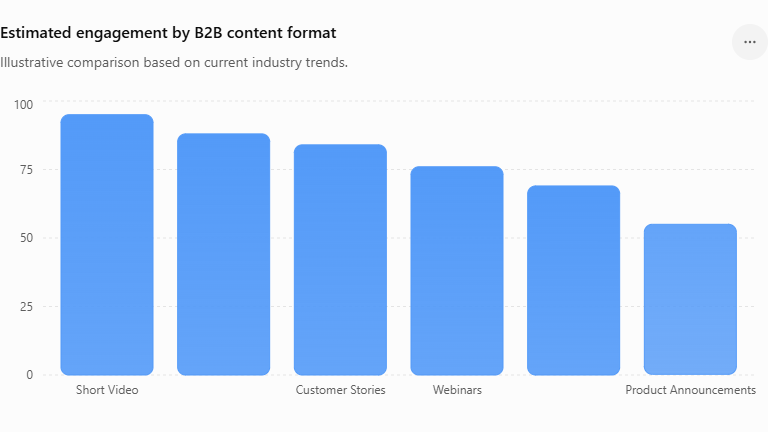
Campaign Performance Comparison
Estimated engagement by B2B content format
Illustrative comparison based on current industry trends.0255075100Short VideoCustomer StoriesWebinarsProduct Announcements
Lesson 4:
Buying Committees Matter More Than Individual Leads
Today’s enterprise purchase rarely depends on one decision-maker.
Most buying groups involve:
- Marketing leaders
- IT
- Finance
- Procurement
- Operations
- Executive leadership
Successful campaigns now deliver tailored messaging for each stakeholder rather than relying on a single generic campaign. Industry guidance increasingly stresses engaging the entire buying committee with relevant content.
Lesson 5:
Omnichannel Is No Longer Optional
The best-performing campaigns combined multiple touchpoints:
- Email marketing
- LinkedIn advertising
- Organic social media
- Display advertising
- Content syndication
- Sales outreach
- Webinars
- Retargeting
Rather than treating each channel separately, marketers orchestrated connected customer journeys.
Lesson 6:
Events Continue to Generate High-Value Pipeline
Major industry gatherings remain powerful demand-generation opportunities.
Events such as industry conferences and creativity festivals demonstrated how organizations can combine:
- Live experiences
- Executive networking
- Video interviews
- Social media content
- Sponsored sessions
Into campaigns that extend far beyond the event itself. Coverage from recent marketing events highlighted increased sponsorship, executive interviews, and ongoing content production to maximize impact.

Lesson 7:
Brand Building Supports Demand Generation
A common misconception in B2B marketing is that branding and demand generation compete.
Recent campaigns show they work together.
Brand campaigns create:
- Awareness
- Trust
- Familiarity
- Credibility
Demand generation converts that awareness into:
- Pipeline
- Meetings
- Opportunities
- Revenue
Many 2026 marketing trend analyses describe this as the convergence of brand and demand.
Lesson 8:
Personalization Continues to Win
Modern campaigns increasingly personalize:
- Landing pages
- Email sequences
- Industry messaging
- Website experiences
- Advertising creative
- Product recommendations
Instead of one-size-fits-all messaging.
AI now enables personalization at enterprise scale while maintaining consistency.
Lesson 9:
Customer Stories Beat Product Features
One noticeable trend this month:
Companies talked less about features.
They talked more about:
- Customer outcomes
- Revenue growth
- Productivity improvements
- ROI
- Transformation
Instead of saying:
“Our platform has AI.”
They explained:
“Here’s how customers reduced campaign costs by 30%.”
Outcome-focused messaging consistently performs better than feature-focused marketing.
Lesson 10:
Measurement Is Becoming More Sophisticated
Marketing teams now evaluate campaigns using metrics like:
| Traditional Metrics | Modern Revenue Metrics |
|---|---|
| Clicks | Pipeline Created |
| Opens | Revenue Influenced |
| Impressions | Buying Group Engagement |
| Downloads | Opportunity Creation |
| Followers | Customer Lifetime Value |
This evolution aligns marketing performance more closely with business goals.
Final Thoughts
This month’s biggest B2B marketing campaigns reinforce a clear direction for the industry. Winning organizations are moving beyond isolated tactics and embracing integrated, customer-centric strategies that combine AI, executive thought leadership, video, omnichannel execution, and measurable business outcomes.
The common thread across successful campaigns is simple: they prioritize trust, relevance, and value over volume. As buying journeys become more complex and buying committees expand, marketers who focus on personalized experiences, revenue impact, and authentic expertise will be better positioned to generate sustainable pipeline and long-term growth.