


Introduction
The traditional B2B go-to-market playbook is rapidly becoming outdated.
For years, businesses relied on predictable sales funnels, broad marketing campaigns, manual prospecting, and static customer segmentation. While these methods delivered results in the past, today’s buyers behave differently. Decision makers conduct extensive online research before speaking with a sales representative, expect highly personalized communication, and evaluate multiple vendors simultaneously.
This transformation has forced organizations to rethink how they attract, engage, and convert potential customers.
Artificial intelligence has emerged as the foundation of this new approach.
Rather than simply automating repetitive marketing tasks, AI is now influencing every stage of the customer lifecycle. Companies are using intelligent systems to identify buying intent, predict customer needs, personalize messaging, optimize advertising budgets, prioritize sales opportunities, and forecast revenue with greater accuracy.
The result is a more agile, data-driven go-to-market strategy that allows businesses to respond to market changes faster than ever before.
Across industries, executives are recognizing that AI is no longer a competitive advantage reserved for early adopters. It has become a business necessity.
Organizations that continue relying on manual processes risk slower growth, lower marketing efficiency, and reduced competitiveness.
Why Traditional GTM Models Are No Longer Enough
Several major market changes have reshaped how B2B organizations sell products and services.
Buyers now complete much of their purchasing journey independently. Research reports, product comparisons, customer reviews, webinars, analyst opinions, and online communities influence buying decisions before a prospect ever fills out a contact form.
This means companies have fewer opportunities to make a strong first impression.
| Traditional GTM Models | Modern B2B Buyer Expectations |
|---|---|
| Large outbound email campaigns | Personalized recommendations |
| Manual lead qualification | Immediate responses |
| Generic content marketing | Relevant content tailored to their needs |
| Fixed buyer personas | Consistent communication across channels |
| Broad industry segmentation | Faster problem resolution |
| Static CRM workflows | Digital-first engagement |
Meeting these expectations manually has become increasingly difficult as customer journeys grow more complex.
Artificial intelligence fills this gap by helping organizations analyze massive volumes of behavioral data in real time.
Instead of reacting after customers engage, AI helps companies anticipate buying signals before competitors notice them.
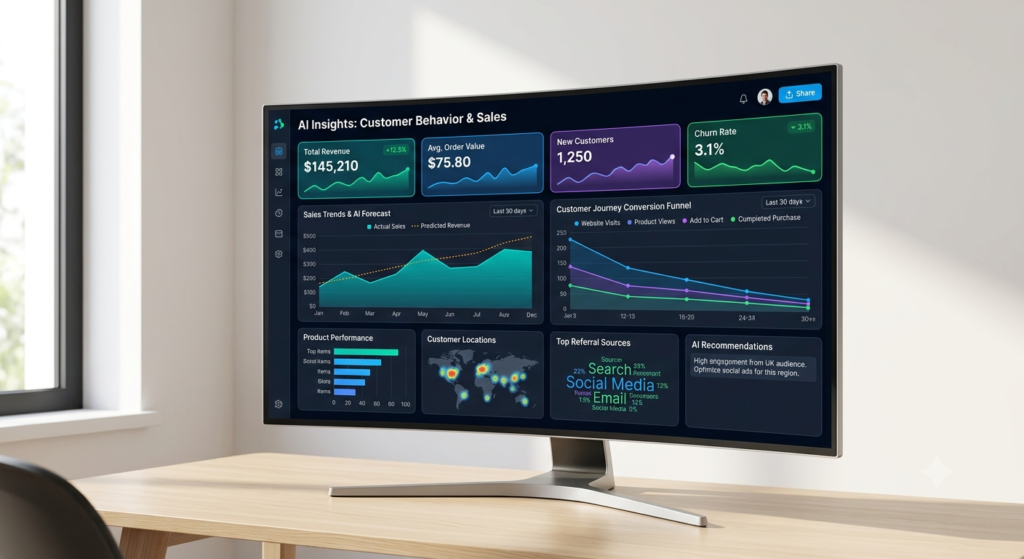
AI Has Become the Core of Modern GTM
Artificial intelligence is changing how every department contributes to revenue generation.
Marketing teams use AI to identify audiences that are most likely to convert.
Sales teams rely on predictive scoring to prioritize high-value opportunities.
Customer success teams monitor engagement data to reduce churn.
Executives gain real-time visibility into pipeline health and revenue forecasting.
Instead of operating independently, these departments now share insights generated by AI.
This creates a unified revenue engine built around customer intelligence rather than assumptions.
Examples include:
Marketing
- AI-powered content recommendations
- Dynamic audience segmentation
- Automated campaign optimization
- Predictive lead scoring
- Intelligent advertising allocation
Sales
- Opportunity prioritization
- Conversation intelligence
- Automated meeting summaries
- Proposal generation
- Forecast prediction
Customer Success
- Churn prediction
- Expansion opportunity identification
- Personalized onboarding
- Customer health monitoring
- Renewal forecasting
When these capabilities work together, businesses improve both operational efficiency and customer satisfaction.
The Business Drivers Behind the Shift
Several industry trends explain why companies are redesigning their GTM strategies around artificial intelligence.
1. Increasing Buyer Expectations
Customers expect relevant information immediately.
Generic campaigns often fail because buyers compare every interaction with the personalized digital experiences offered by leading technology companies.
AI helps businesses personalize communications across websites, email, social media, paid advertising, and sales outreach.
2. Data Volume Has Exploded
Every customer interaction creates valuable information.
This includes:
- Website visits
- Email engagement
- Webinar attendance
- CRM activities
- Product usage
- Social interactions
- Search behavior
Analyzing millions of data points manually is impossible.
AI transforms this data into actionable business intelligence.
3. Revenue Teams Need Better Efficiency
Many organizations continue facing pressure to generate more pipeline while controlling costs.
AI reduces repetitive administrative work by automating:
- CRM updates
- Meeting notes
- Lead routing
- Customer segmentation
- Email personalization
- Reporting
This allows revenue teams to focus on strategic activities that directly contribute to business growth.
4. Better Forecasting
Revenue forecasting has historically depended on sales manager experience and historical performance.
AI introduces predictive models that evaluate:
- Deal progression
- Customer intent
- Historical win rates
- Market conditions
- Buying behavior
This results in more accurate forecasting and improved business planning.

AI Is Transforming Every Revenue Team
Organizations are increasingly moving away from isolated AI tools and toward integrated AI ecosystems that connect marketing, sales, operations, and customer success.
For marketing teams, AI can identify which content topics generate the highest engagement, recommend optimal publishing times, and personalize campaigns based on industry, company size, and buyer intent.
Sales representatives benefit from AI-generated insights that highlight the best prospects to contact, recommend next actions, and summarize customer interactions automatically. This allows sales professionals to spend more time building relationships instead of managing administrative tasks.
Revenue operations teams use AI to improve data quality, monitor pipeline health, detect forecasting risks, and identify process inefficiencies before they affect business performance.
Customer success teams leverage predictive analytics to recognize early signs of disengagement, recommend proactive outreach, and uncover expansion opportunities within existing accounts.
As these capabilities mature, AI becomes a central intelligence layer that supports every stage of the customer journey, enabling organizations to operate with greater speed, accuracy, and confidence.
Why Buyers Now Expect AI-Powered Experiences
The modern B2B buying journey is no longer linear. Decision makers interact with multiple channels before contacting a sales team. They may read industry articles, attend webinars, compare vendors, watch product demonstrations, download reports, and seek recommendations from peers.
This shift has changed expectations. Buyers now want every interaction to be timely, relevant, and personalized.
Artificial intelligence helps businesses meet these expectations by analyzing customer behavior and adapting experiences in real time.
Instead of presenting the same website content to every visitor, AI can tailor recommendations based on:
- Industry
- Company size
- Geographic location
- Previous website visits
- Content downloads
- Buying stage
- Product interests
This creates a more engaging experience that helps buyers find relevant information faster while increasing the likelihood of conversion.
Personalization Is Becoming the New Competitive Advantage
Personalization has evolved beyond simply including a recipient’s first name in an email.
Today’s leading B2B organizations personalize nearly every stage of the customer journey.
Examples include:
- Landing pages customized for different industries
- Product recommendations based on browsing behavior
- AI-generated email sequences tailored to prospect interests
- Dynamic website content
- Personalized webinar invitations
- Customized pricing discussions
- Intelligent chatbot conversations
Companies that deliver these experiences often see improvements in engagement, lead quality, and customer satisfaction.
As buyers become accustomed to personalized digital experiences in both their professional and personal lives, expectations continue to rise.
Organizations that fail to provide relevant experiences risk losing potential customers to competitors who can.

AI Is Reshaping Demand Generation
Demand generation has traditionally focused on attracting large audiences and nurturing prospects through marketing campaigns.
Artificial intelligence makes these efforts significantly more targeted and measurable.
Instead of relying solely on demographic information, AI evaluates behavioral signals that indicate purchase intent.
Examples include:
- Multiple visits to pricing pages
- Repeated downloads of technical resources
- Webinar participation
- Increased engagement with product content
- Email interaction frequency
- Searches related to specific business challenges
These signals allow marketers to identify prospects who are actively researching solutions.
As a result, marketing teams can allocate budgets more effectively while delivering highly relevant campaigns.
AI-Powered Demand Generation Capabilities
| Traditional Approach | AI-Driven Approach |
|---|---|
| Broad audience targeting | Intent-based targeting |
| Manual segmentation | Dynamic segmentation |
| Scheduled campaigns | Real-time campaign optimization |
| Generic nurturing | Personalized nurturing journeys |
| Historical reporting | Predictive performance insights |
Organizations adopting AI-powered demand generation are seeing stronger alignment between marketing investment and pipeline creation.
Account-Based Marketing Becomes Smarter with AI
Account-Based Marketing (ABM) has become one of the most effective strategies for reaching high-value business customers.
Artificial intelligence is making ABM even more effective.
Instead of manually identifying target accounts, AI evaluates thousands of companies based on factors such as:
- Revenue growth
- Hiring activity
- Technology adoption
- Website engagement
- Content consumption
- Buying intent signals
- Industry trends
Marketing and sales teams can then prioritize accounts with the highest probability of conversion.
AI also recommends personalized messaging based on each account’s challenges and interests.
This allows businesses to scale ABM programs without sacrificing personalization.
AI Improves Sales Productivity
Sales professionals spend a significant portion of their day on administrative tasks rather than selling.
Artificial intelligence helps reclaim valuable time by automating repetitive activities.
Examples include:
- Meeting transcription
- CRM updates
- Email drafting
- Call summaries
- Follow-up reminders
- Opportunity scoring
- Pipeline analysis
Rather than replacing sales representatives, AI acts as a productivity assistant.
Sales teams can spend more time building relationships, understanding customer needs, and closing deals.
Organizations adopting AI-assisted selling frequently report shorter sales cycles and better forecast accuracy.

Real-World Industry Examples
Across industries, organizations are integrating AI into their go-to-market strategies to improve efficiency and customer engagement.
Technology
Software companies use AI to identify product-qualified leads based on usage patterns and feature adoption. Sales teams receive alerts when customers show signs of expanding their subscriptions.
Manufacturing
Manufacturers analyze customer purchasing behavior and equipment usage to recommend maintenance services, upgrades, and replacement products before issues arise.
Healthcare
Healthcare technology providers use AI to personalize educational content, helping hospitals and clinics discover solutions that match their operational priorities.
Financial Services
Banks and fintech companies analyze transaction trends and customer interactions to recommend financial products while improving fraud detection.
Professional Services
Consulting firms use AI to identify emerging client needs, automate proposal generation, and improve resource planning.
Although implementation varies by industry, the common objective remains the same: deliver more relevant customer experiences while improving operational efficiency.
Challenges Organizations Must Overcome
While AI offers significant opportunities, rebuilding a go-to-market strategy around AI is not without challenges.
Data Quality
AI systems depend on accurate, consistent, and complete data.
Organizations with fragmented CRM records, duplicate contacts, or outdated information may struggle to achieve reliable results.
Investing in data governance is often the first step toward successful AI adoption.
Employee Adoption
Technology alone does not transform an organization.
Employees must understand how AI supports their work and receive proper training to use new tools effectively.
Successful companies position AI as a productivity enhancer rather than a replacement for human expertise.
Privacy and Compliance
Businesses must ensure AI initiatives comply with data protection regulations and customer privacy expectations.
Clear governance policies, transparent data usage, and secure infrastructure are essential for maintaining trust.
Integration Complexity
Many organizations operate dozens of disconnected platforms across marketing, sales, customer support, and analytics.
Integrating AI across these systems requires careful planning and collaboration between business and technology teams.
A phased implementation approach often delivers better long-term results than attempting large-scale transformation all at once.
AI Governance Is Becoming a Strategic Priority
As AI adoption accelerates, governance is becoming a key part of every modern go-to-market strategy.
Leading organizations are establishing policies that address:
- Responsible AI usage
- Data privacy
- Human oversight
- Model transparency
- Bias monitoring
- Security controls
- Regulatory compliance
Strong governance helps businesses build confidence among customers, employees, and stakeholders while reducing operational risk.
Companies that prioritize responsible AI are more likely to sustain long-term success as regulations continue to evolve.
Future Trends: Where AI-Powered GTM Is Headed in 2027
Artificial intelligence will continue to redefine how B2B organizations plan, execute, and measure go-to-market strategies. While many businesses are currently focused on automation and personalization, the next phase of AI adoption will center on intelligent decision-making and autonomous execution.
Below are the trends expected to shape the future of B2B GTM strategies.
1. AI Agents Will Support Revenue Teams
Instead of using separate AI tools for email writing, forecasting, or reporting, businesses will increasingly adopt AI agents capable of completing multi-step tasks.
These AI agents will be able to:
- Research target accounts
- Build prospect lists
- Draft personalized outreach
- Schedule follow-ups
- Summarize customer meetings
- Update CRM records
- Recommend next-best actions
Rather than replacing sales and marketing professionals, AI agents will reduce repetitive work, allowing teams to focus on relationship building and strategic planning.
2. Predictive Revenue Intelligence Will Become Standard
Future GTM strategies will rely more heavily on predictive analytics.
AI will help organizations answer questions such as:
- Which accounts are most likely to convert?
- Which opportunities are at risk?
- Which customers may churn?
- Which campaigns deserve more budget?
- Which products are likely to gain demand next quarter?
This level of forecasting will enable more informed business decisions and improve resource allocation.
3. Revenue Operations Will Become More Data-Driven
Revenue Operations (RevOps) teams will continue to play a central role in AI adoption.
Instead of manually consolidating reports from different platforms, AI will create unified dashboards that combine:
- Marketing performance
- Sales pipeline health
- Customer engagement
- Financial metrics
- Product usage
- Customer support insights
These connected insights will help leaders identify trends and respond more quickly to changing market conditions.
4. AI Will Improve Customer Retention
Winning new customers is only part of the equation.
Businesses are increasingly using AI to strengthen long-term customer relationships.
Predictive models can identify early signs of dissatisfaction by analyzing:
- Product usage
- Support tickets
- Survey responses
- Renewal activity
- Engagement trends
This enables customer success teams to take proactive action before issues lead to churn.

Key Takeaways
Artificial intelligence is no longer a side project within marketing or IT. It is becoming the foundation of modern go-to-market strategies.
Businesses that successfully integrate AI across marketing, sales, customer success, and operations can expect benefits such as:
- Better lead qualification
- More personalized customer experiences
- Improved sales productivity
- Higher marketing efficiency
- Faster decision-making
- More accurate forecasting
- Stronger customer retention
- Better alignment between revenue teams
Organizations that combine AI capabilities with high-quality data, skilled employees, and responsible governance will be better positioned to compete in rapidly changing B2B markets.
Conclusion
The B2B go-to-market landscape is undergoing a significant transformation. Buyers expect personalized experiences, faster responses, and solutions that address their specific business challenges. Traditional GTM models, built around manual processes and broad messaging, are no longer sufficient to meet these expectations.
Artificial intelligence enables organizations to replace assumptions with insights. By analyzing customer behavior, predicting buying intent, and automating routine tasks, AI helps revenue teams operate with greater precision and agility.
However, technology alone is not enough. Long-term success depends on clean data, cross-functional collaboration, employee training, and responsible AI governance. Companies that approach AI as a strategic capability rather than a standalone tool will be better equipped to build stronger customer relationships and accelerate growth.
As AI continues to evolve, businesses that adapt their go-to-market strategies today will be better prepared for the opportunities and challenges of tomorrow.
Frequently Asked Questions
What is an AI-powered go-to-market strategy?
An AI-powered go-to-market strategy uses artificial intelligence to improve how businesses identify target audiences, personalize customer experiences, optimize marketing campaigns, support sales teams, and forecast revenue.
Why are B2B companies investing in AI?
B2B organizations are investing in AI to improve operational efficiency, increase marketing performance, shorten sales cycles, enhance customer engagement, and make more informed business decisions.
Does AI replace sales and marketing teams?
No. AI is designed to support professionals by automating repetitive tasks and providing data-driven insights. Human expertise remains essential for relationship building, strategic planning, and complex decision-making.
Which departments benefit most from AI?
AI supports multiple business functions, including:
- Marketing
- Sales
- Customer Success
- Revenue Operations
- Finance
- Product Management
- Executive Leadership
How should companies begin implementing AI?
Organizations should start by improving data quality, identifying high-impact use cases, training employees, integrating AI into existing workflows, and establishing governance policies to ensure responsible use.