
Introduction
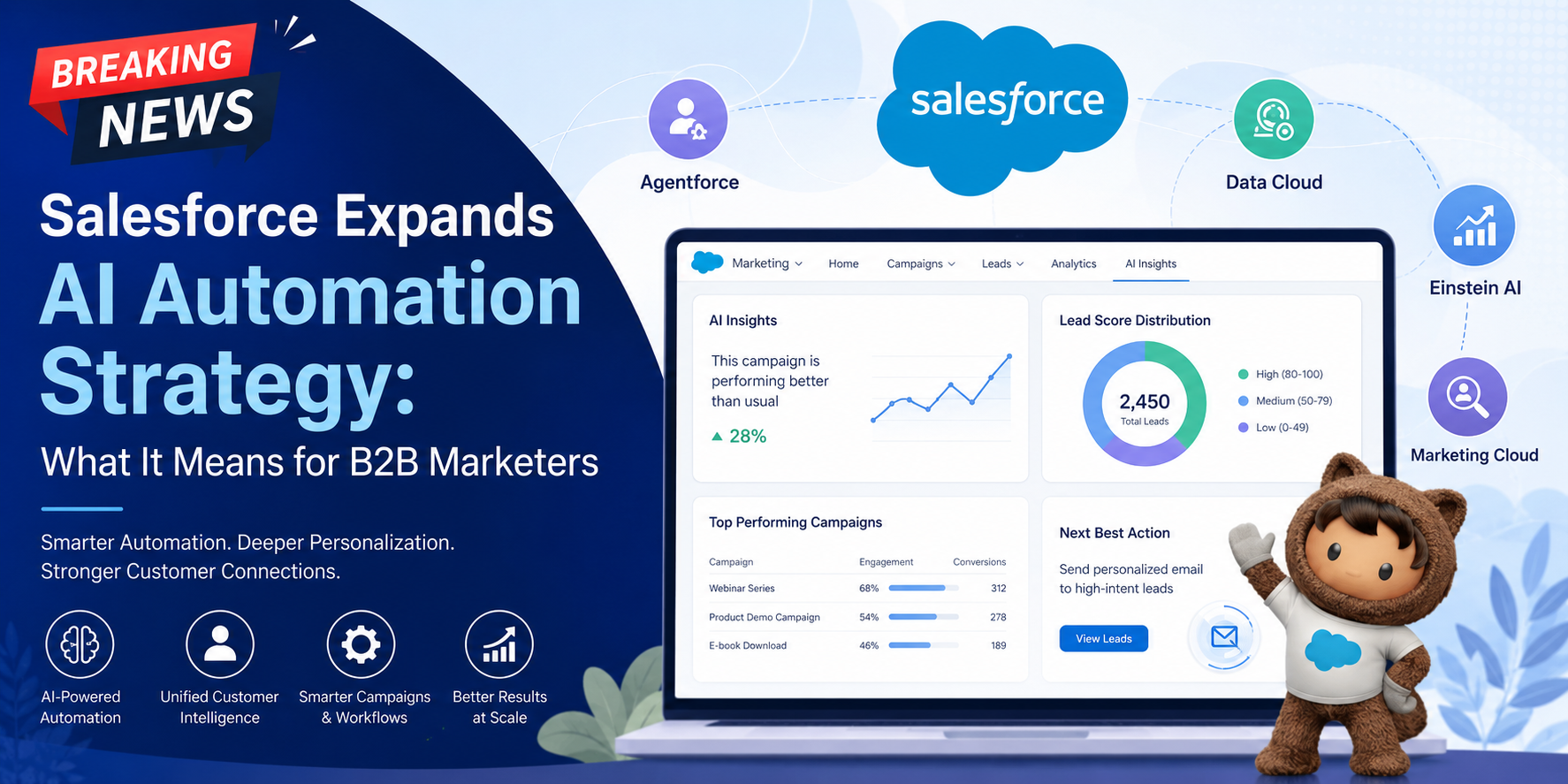
Artificial intelligence continues to redefine the future of customer relationship management, and Salesforce is once again leading that transformation. At its latest product announcements and platform updates, Salesforce expanded its AI automation strategy by introducing more powerful capabilities across Agentforce, Data Cloud, Marketing Cloud, Sales Cloud, and Service Cloud. These enhancements are designed to help businesses automate repetitive tasks, improve customer engagement, and enable teams to make faster, data-driven decisions.
For B2B marketers, this is more than a routine software update. It represents a significant shift in how marketing campaigns are planned, executed, optimized, and measured. Instead of relying on disconnected tools or manual workflows, organizations can now leverage AI directly within the Salesforce ecosystem to generate content, qualify leads, personalize customer journeys, automate follow-up actions, and deliver meaningful insights in real time.
The modern B2B buying journey has become increasingly complex. Buyers interact with websites, webinars, email campaigns, social media, digital advertisements, events, and sales representatives before making a purchasing decision. Managing these touchpoints manually is becoming nearly impossible, especially for organizations targeting multiple industries and global markets. Salesforce’s expanded AI strategy addresses this challenge by bringing intelligent automation into every stage of the customer lifecycle.
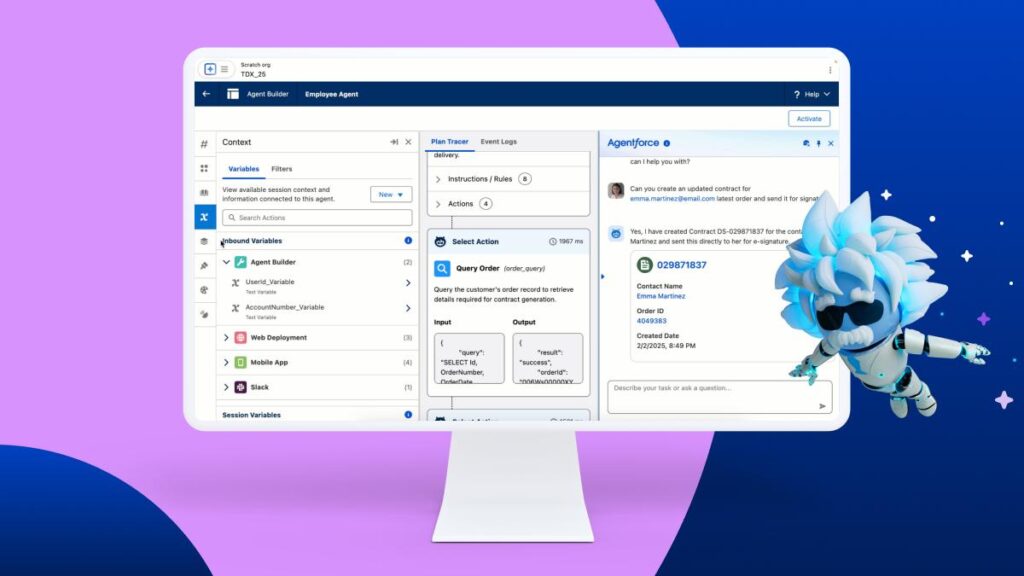
One of the biggest highlights is the continued evolution of Agentforce, Salesforce’s AI-powered digital workforce. Rather than functioning as a simple chatbot or content assistant, Agentforce can execute business processes, respond to customer requests, assist employees, and automate multi-step workflows while remaining connected to trusted company data. This allows marketing and sales teams to spend less time on administrative work and more time developing strategies that drive revenue.
Another major component is Data Cloud, which serves as the foundation for AI-driven personalization. By combining customer information from websites, CRM records, email interactions, purchases, and service conversations, Data Cloud creates a unified customer profile that AI can use to deliver more accurate recommendations and personalized experiences. For marketers, this means campaigns can become significantly more relevant without requiring additional manual effort.
Salesforce has also expanded AI functionality within Marketing Cloud, enabling marketers to create personalized email content, optimize campaign timing, analyze engagement patterns, and identify high-value prospects more efficiently than ever before. Combined with predictive analytics and intelligent automation, these capabilities allow businesses to improve campaign performance while reducing operational complexity.
These platform updates reflect a broader trend across the technology industry. AI is no longer an optional enhancement but an essential component of modern business operations. Organizations that embrace intelligent automation today are positioning themselves to respond more quickly to changing customer expectations, market conditions, and competitive pressures.
In this article, we will examine Salesforce’s latest AI automation strategy, explore its newest platform enhancements, and explain what these developments mean for B2B marketers looking to improve efficiency, increase personalization, and accelerate business growth in 2026.
Salesforce’s Latest AI Automation Strategy: What’s New in 2026
The latest wave of Salesforce platform enhancements demonstrates a clear vision for the future of enterprise software. Rather than introducing isolated AI features, Salesforce is creating a unified ecosystem where artificial intelligence works across every customer-facing department. Marketing, sales, customer service, commerce, and analytics are now more closely connected than ever, enabling businesses to operate with greater speed, accuracy, and efficiency.
At the center of this strategy is Agentforce, Salesforce’s AI-powered digital labor platform. Unlike traditional automation tools that follow predefined rules, Agentforce is designed to understand business context, access trusted company data, and perform complex tasks with minimal human intervention. It can assist employees, support customers, automate workflows, and provide intelligent recommendations while remaining connected to the Salesforce platform.
This represents a significant evolution from earlier automation systems. Previously, marketers had to manually create workflows, define triggers, and build multiple automation rules for every campaign. With AI-driven automation, many of these repetitive tasks can now be completed dynamically based on customer behavior and business objectives. Instead of simply reacting to events, AI can predict the next best action and execute it automatically.
Another major focus is the continued expansion of Salesforce Data Cloud, which serves as the intelligence layer behind many AI capabilities. Modern businesses collect customer information from numerous sources, including websites, CRM records, email campaigns, webinars, online purchases, customer support interactions, and social media engagement. Traditionally, this information remained scattered across different systems, making it difficult to gain a complete understanding of each customer.
Data Cloud solves this challenge by creating a unified customer profile that updates in real time. Every interaction contributes to a richer view of the customer, allowing AI models to generate more accurate insights, predict buying intent, and recommend personalized actions. For B2B marketers, this means campaigns can be tailored based on actual customer behavior rather than assumptions or outdated segmentation.
Salesforce has also expanded the capabilities of Marketing Cloud by integrating generative AI into campaign creation and customer engagement. Marketers can now generate email copy, personalize subject lines, recommend audience segments, optimize send times, and analyze campaign performance with AI assistance. These features help teams launch campaigns faster while maintaining consistency and relevance across every communication channel.
The improvements extend into Sales Cloud, where AI now supports sales representatives with intelligent lead prioritization, opportunity summaries, meeting preparation, and recommended follow-up actions. By reducing administrative work, sales professionals can focus more on building relationships and closing deals. Marketing teams also benefit because AI helps identify which leads are most likely to convert, improving alignment between marketing and sales.
Another important enhancement is the integration of AI into workflow automation. Businesses often rely on multiple departments to complete a single customer journey. A prospect might download a whitepaper, attend a webinar, request a product demonstration, receive follow-up emails, and eventually speak with a sales representative. Salesforce’s expanded automation strategy enables these workflows to operate more intelligently by using AI to determine the most effective sequence of actions for each individual customer.
Security and trust remain central to Salesforce’s AI vision. The company continues to emphasize responsible AI practices by ensuring that customer data is protected, access is controlled, and AI-generated outputs are grounded in trusted business information. This is particularly important for B2B organizations that manage sensitive customer records and must comply with regulations such as GDPR and other global privacy standards.
For marketers, these updates signal a transition from automation based solely on rules to automation powered by intelligence. AI is no longer limited to generating content or answering questions. It is becoming an active participant in campaign execution, customer engagement, lead qualification, and performance optimization. Businesses that adopt these capabilities early will be better positioned to respond to changing buyer expectations and compete in an increasingly AI-driven marketplace.
Why This Matters for B2B Marketers
These platform updates provide several strategic advantages:
- They reduce the time required to plan and launch marketing campaigns.
- They enable personalized customer experiences at scale.
- They improve lead qualification through predictive AI models.
- They strengthen collaboration between marketing and sales teams.
- They help organizations make faster decisions using real-time customer insights.
- They allow marketers to focus on strategy and creativity instead of repetitive administrative tasks.
As AI becomes more deeply embedded within Salesforce, marketers will have access to tools that not only automate work but also provide actionable intelligence to improve every stage of the customer journey.
How Agentforce Is Transforming B2B Marketing and Marketing Automation
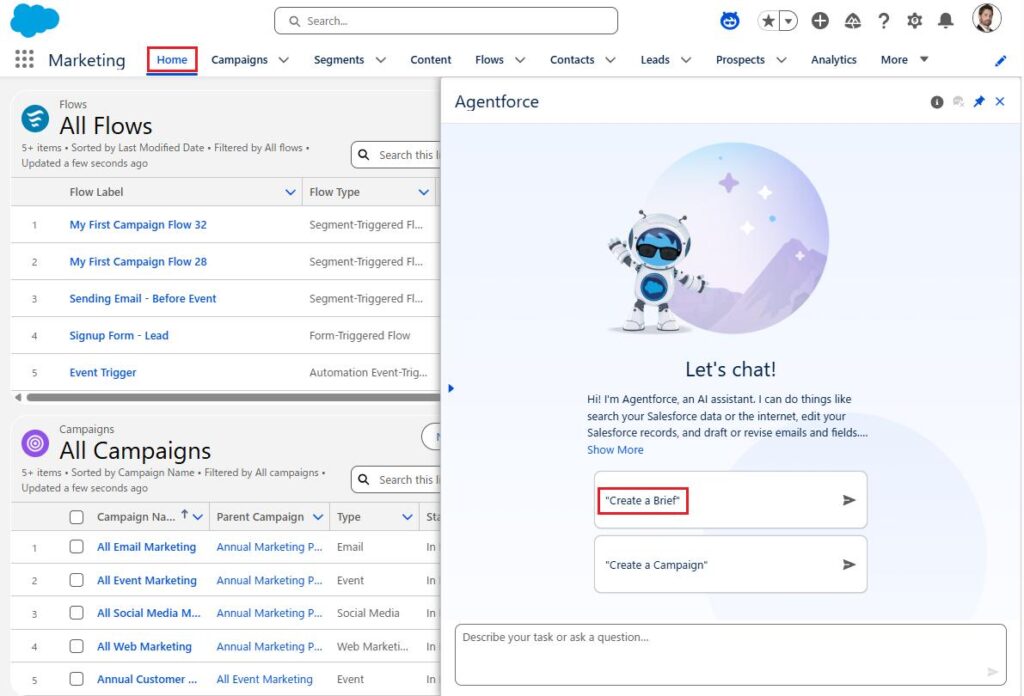
The introduction and continued expansion of Agentforce marks one of the most significant changes to the Salesforce platform in recent years. While earlier AI tools primarily focused on generating text, analyzing reports, or answering simple questions, Agentforce introduces a new approach by acting as an intelligent digital workforce capable of completing business tasks across marketing, sales, and customer service.
For B2B marketers, this means AI is no longer just a productivity tool. It becomes an active participant in campaign planning, customer engagement, lead management, and performance optimization. Instead of spending hours on repetitive administrative work, marketing teams can delegate many routine activities to AI while focusing on strategic initiatives that drive business growth.
What Is Agentforce?
Agentforce is Salesforce’s AI-powered platform that enables organizations to deploy intelligent agents capable of understanding business objectives, accessing trusted company data, and completing multi-step tasks. These agents work within the Salesforce ecosystem and use information from CRM records, Data Cloud, Marketing Cloud, and other connected applications to provide accurate and context-aware responses.
Unlike traditional chatbots that rely on scripted conversations, Agentforce can reason through complex requests, retrieve relevant information, and perform actions on behalf of users. This makes it valuable not only for customer support but also for internal marketing and sales operations.
For example, a marketing manager could ask an AI agent to identify the highest-performing campaigns from the previous quarter, summarize key insights, recommend improvements, and prepare a presentation for the leadership team. Instead of manually gathering data from multiple dashboards, the AI agent completes the process within minutes.
Reducing Manual Work Across Marketing Teams
Marketing professionals often spend a large portion of their day completing repetitive operational tasks. While these activities are necessary, they leave less time for creativity, strategy, and customer engagement.
Common marketing responsibilities include:
- Building campaign reports
- Updating CRM records
- Assigning leads to sales representatives
- Monitoring campaign performance
- Reviewing customer engagement data
- Scheduling follow-up emails
- Organizing audience segments
- Creating meeting summaries
- Preparing weekly performance dashboards
Agentforce helps automate many of these tasks. Rather than requiring marketers to move between multiple applications, AI can retrieve data, generate reports, recommend actions, and complete workflows directly within Salesforce.
This improves productivity while reducing the risk of human error.
Intelligent Campaign Planning
Planning a successful B2B campaign requires analyzing historical performance, understanding audience behavior, selecting the right channels, and creating personalized messaging. Traditionally, these activities involve significant manual research and collaboration.
Agentforce accelerates this process by analyzing previous campaigns and identifying patterns that contributed to success. It can evaluate metrics such as email open rates, click-through rates, landing page conversions, webinar registrations, and sales opportunities to recommend the most effective campaign strategy.
For example, if previous campaigns targeting technology decision-makers performed better on Tuesday mornings with educational content, Agentforce can recommend similar scheduling and messaging for future campaigns. These recommendations are based on actual performance data rather than assumptions, helping marketers make more informed decisions.
Smarter Lead Qualification
One of the biggest challenges in B2B marketing is determining which leads deserve immediate attention. Sales teams often receive large volumes of inquiries, but not every prospect is ready to purchase.
Agentforce uses AI to evaluate multiple signals before recommending lead priority. These signals may include website activity, content downloads, webinar attendance, email engagement, company size, industry, previous interactions, and historical buying patterns.
Instead of relying on a fixed scoring model, AI continuously updates its recommendations as customer behavior changes. This dynamic approach helps marketing teams deliver higher-quality leads while enabling sales representatives to focus on opportunities with the greatest potential.
Personalized Customer Engagement
Modern B2B buyers expect every interaction to be relevant to their specific interests and business needs. Generic messaging is increasingly ignored because buyers receive hundreds of marketing communications every week.
Agentforce helps marketers deliver personalization at scale by analyzing customer profiles and recommending tailored content for each stage of the buying journey.
For instance, a prospect who recently downloaded a cybersecurity whitepaper may receive invitations to related webinars, case studies from similar industries, and product information that aligns with their interests. Another prospect researching cloud migration may receive an entirely different sequence of communications.
This level of personalization improves engagement while strengthening customer relationships.
Supporting Sales and Marketing Collaboration
Successful revenue generation depends on strong collaboration between marketing and sales. However, these departments often work with different priorities, metrics, and timelines.
Agentforce helps bridge this gap by providing shared intelligence that benefits both teams. Marketing can see how prospects interact with campaigns, while sales representatives receive AI-generated summaries of customer activity before every conversation.
Imagine a salesperson preparing for a meeting with a prospective client. Instead of reviewing multiple systems, Agentforce can generate a concise briefing that includes recent website visits, downloaded resources, email engagement, webinar participation, previous conversations, and recommended discussion topics.
This allows sales representatives to enter meetings with greater confidence and deliver more relevant conversations.
Improving Marketing Efficiency Without Replacing Human Creativity
Although Agentforce automates many operational tasks, it is not intended to replace marketing professionals. Creativity, strategic thinking, relationship building, and brand storytelling remain uniquely human strengths.
AI performs best when handling repetitive processes, organizing information, analyzing large datasets, and generating first drafts. Human marketers remain responsible for refining messaging, making strategic decisions, ensuring brand consistency, and building emotional connections with customers.
Organizations that combine AI efficiency with human expertise are likely to achieve the strongest marketing results.
Real Business Benefits for B2B Organizations
Companies adopting Agentforce can expect several measurable advantages:
- Faster campaign planning and execution.
- Reduced administrative workload for marketing teams.
- Improved lead qualification and sales readiness.
- Better personalization across customer touchpoints.
- More accurate campaign reporting and performance insights.
- Increased collaboration between marketing, sales, and customer service.
- Higher operational efficiency through intelligent automation.
These improvements allow organizations to scale marketing efforts without proportionally increasing headcount or operational complexity.
The Shift Toward AI-Driven Marketing Operations
Agentforce reflects a broader transformation taking place across the B2B marketing industry. AI is evolving from a helpful assistant into an intelligent collaborator that participates in everyday business operations. As these capabilities continue to mature, marketing teams will spend less time managing systems and more time creating innovative campaigns, understanding customer needs, and driving business growth.
For organizations already using Salesforce, Agentforce provides a practical path toward more efficient, data-driven marketing. For those considering a CRM or marketing automation platform, it highlights how AI is becoming an essential component of modern customer engagement.
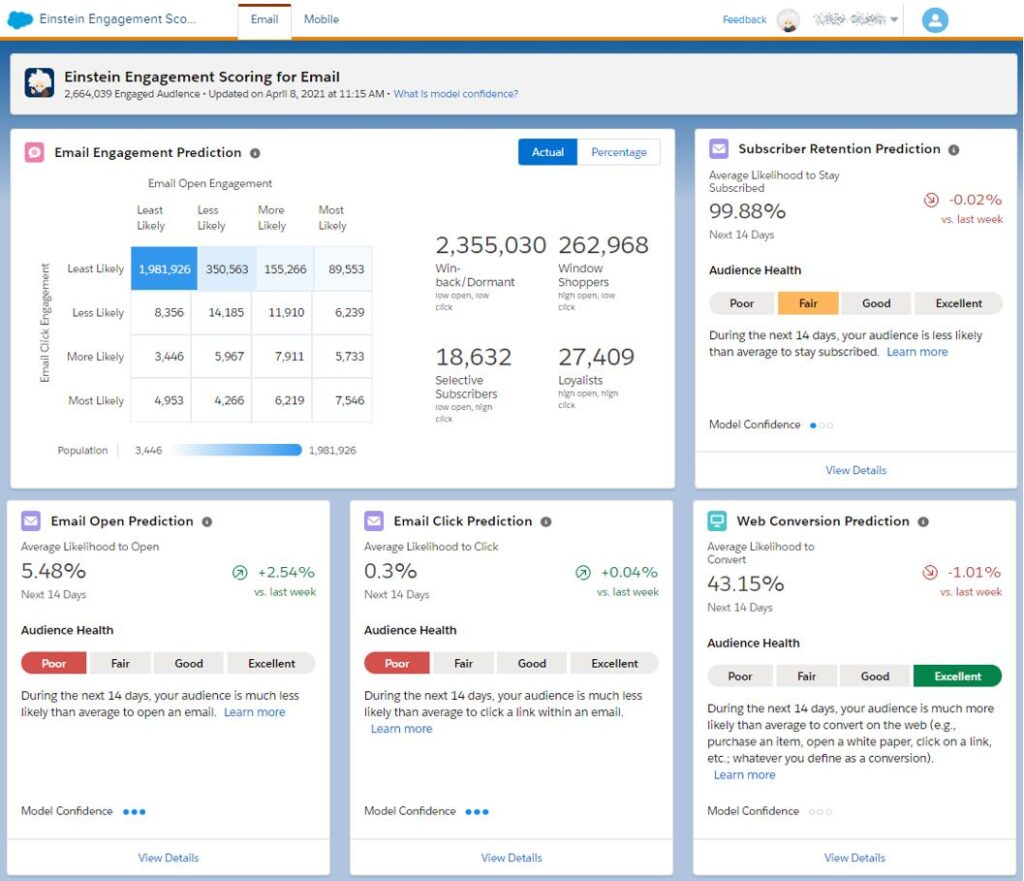
One of the biggest reasons businesses invest in Salesforce is its ability to centralize customer information and automate marketing processes. With the latest expansion of its AI automation strategy, Salesforce is taking these capabilities much further by enabling marketers to create highly personalized experiences, identify sales-ready prospects faster, and optimize campaigns in real time.
For B2B organizations, where buying decisions often involve multiple stakeholders and long sales cycles, these AI-driven capabilities can significantly improve marketing performance while reducing the manual effort required to manage complex campaigns.
AI Powered Personalization Is Becoming the New Standard
Today’s B2B buyers expect every interaction with a brand to be relevant. They no longer respond well to generic email campaigns or broad marketing messages that fail to address their specific challenges.
Salesforce uses AI to analyze customer behavior across multiple touchpoints, including website visits, email engagement, webinar attendance, CRM activity, content downloads, previous purchases, and interactions with sales or customer service teams. By combining these signals, AI builds a more complete understanding of each customer and helps marketers deliver personalized experiences at scale.
For example, consider two prospects visiting the same website. One is a Chief Information Officer researching cybersecurity solutions, while the other is a Marketing Director exploring demand generation strategies. Although both individuals may download content from the same company, their interests, priorities, and buying journeys are very different.
Instead of sending identical follow-up emails, Salesforce AI can recommend personalized content for each prospect. The Chief Information Officer may receive security case studies, compliance guides, and invitations to technical webinars. Meanwhile, the Marketing Director could receive reports on campaign performance, lead generation strategies, and marketing automation best practices.
This level of personalization increases engagement because customers receive information that directly matches their interests and business goals.
Dynamic Customer Segmentation
Traditional customer segmentation often relies on static lists based on industry, company size, or geographic location. While these factors remain useful, they do not always reflect real-time buying intent.
Salesforce AI continuously updates audience segments based on customer behavior. Prospects move between segments automatically as their engagement changes.
For example:
- A visitor who repeatedly views pricing pages may be identified as having strong purchase intent.
- Someone who downloads multiple whitepapers within a short period may be added to a high-interest nurturing campaign.
- Existing customers exploring additional product pages can be included in cross-sell or upsell programs.
- Contacts who have not engaged for several months can automatically enter re-engagement campaigns.
Because segmentation adapts in real time, marketers can respond to changing customer behavior much faster than with traditional list management.
Smarter Lead Generation Through Predictive Intelligence
Generating leads is only the first step in B2B marketing. The real challenge is identifying which prospects are most likely to become customers.
Salesforce addresses this challenge through predictive AI models that analyze historical sales data alongside current customer behavior. Instead of assigning fixed scores based on predefined rules, AI evaluates hundreds of data points simultaneously.
These may include:
- Website engagement
- Email interactions
- Content consumption
- Event participation
- Company size
- Industry
- Job role
- Previous conversations with sales representatives
- Purchase history
- Buying signals from connected systems
Based on these insights, Salesforce can recommend which leads deserve immediate attention and which should continue through automated nurturing campaigns.
This helps sales teams focus on opportunities with the highest probability of conversion while allowing marketing teams to improve overall pipeline quality.
Intelligent Campaign Automation
Campaign automation has existed for many years, but earlier systems depended heavily on manual workflow creation. Marketers needed to define every trigger, condition, and follow-up action before a campaign could run.
Salesforce’s AI-powered automation introduces a more intelligent approach.
Instead of relying only on fixed rules, AI continuously evaluates customer engagement and recommends the next best action throughout the campaign lifecycle.
For example, if a prospect opens several emails but never clicks a call-to-action button, AI may recommend changing the messaging, adjusting the send time, or offering different content. If another prospect attends a webinar and downloads a product guide, the system may automatically notify the sales team that the account is showing strong buying intent.
These recommendations help marketers optimize campaigns while they are still running instead of waiting until the campaign has ended.
Generative AI Accelerates Content Creation
Creating marketing content remains one of the most time-consuming responsibilities for B2B teams. Email campaigns, landing pages, advertisements, blog articles, webinar invitations, social media posts, and sales enablement materials all require consistent production.
Salesforce integrates generative AI into its marketing platform to assist with content creation.
Marketing teams can use AI to:
- Draft personalized email campaigns.
- Generate subject line variations.
- Create product descriptions.
- Produce campaign summaries.
- Write social media copy.
- Suggest call-to-action phrases.
- Adapt messaging for different audience segments.
- Translate content for global campaigns.
Rather than replacing marketers, AI serves as a creative assistant that produces initial drafts. Human teams remain responsible for reviewing content, ensuring brand consistency, verifying facts, and refining the final message.
This collaborative approach allows organizations to publish content faster without sacrificing quality.
Real Time Campaign Performance Optimization
One of the greatest advantages of AI is its ability to analyze data continuously.
Traditional reporting often requires marketers to wait until a campaign has finished before identifying areas for improvement. By that point, opportunities to increase engagement or conversions may already be lost.
Salesforce AI monitors campaign performance in real time and provides actionable recommendations while campaigns are still active.
Examples include:
- Identifying audience segments with higher engagement.
- Recommending better-performing subject lines.
- Suggesting changes to email delivery times.
- Highlighting underperforming landing pages.
- Detecting declining engagement trends.
- Recommending budget adjustments for paid campaigns.
- Predicting campaign outcomes before completion.
This enables marketers to make informed decisions quickly and maximize return on investment.
Strengthening Account Based Marketing
Many B2B organizations rely on Account Based Marketing (ABM) to target high-value companies with personalized campaigns.
Salesforce AI enhances ABM by combining account intelligence with predictive analytics.
Marketing teams can identify:
- Accounts showing increased buying activity.
- Multiple stakeholders engaging with marketing content.
- Opportunities for personalized outreach.
- Companies likely to expand existing contracts.
- Existing customers with cross-sell potential.
Sales teams receive these insights directly within Salesforce, allowing them to engage decision-makers at the right time with highly relevant messaging.
Delivering Better Customer Experiences
Ultimately, every AI capability introduced by Salesforce supports one primary objective: improving the customer experience.
Instead of overwhelming prospects with generic communications, marketers can deliver timely, relevant, and valuable interactions throughout the buying journey.
Customers benefit from:
- More personalized recommendations.
- Faster responses to inquiries.
- Relevant educational content.
- Consistent communication across channels.
- Better coordination between marketing and sales.
- More helpful post-purchase engagement.
These improvements build trust, strengthen relationships, and increase long-term customer loyalty, which are essential outcomes in B2B markets where purchasing decisions often involve significant investments and extended evaluation periods.
Key Takeaways for B2B Marketers
The latest Salesforce AI enhancements provide marketers with practical tools to:
- Personalize campaigns using real-time customer data.
- Improve lead quality through predictive intelligence.
- Automate repetitive marketing workflows.
- Optimize campaign performance while campaigns are active.
- Produce high-quality marketing content more efficiently.
- Strengthen Account Based Marketing initiatives.
- Deliver better customer experiences across every touchpoint.
Organizations that combine these AI capabilities with a clear marketing strategy and high-quality customer data will be better positioned to generate stronger engagement, higher conversion rates, and sustainable revenue growth.

Salesforce Data Cloud: The Foundation Behind Intelligent Automation
Artificial intelligence is only as effective as the data it can access. No matter how advanced an AI model is, it cannot produce meaningful recommendations if customer information is incomplete, outdated, or spread across disconnected systems. This is why Salesforce has positioned Data Cloud as the foundation of its AI automation strategy.
Data Cloud brings together customer information from multiple business systems into a single, unified profile. Instead of maintaining separate records for website visitors, email subscribers, CRM contacts, webinar attendees, and existing customers, businesses can create a complete view of every account and contact.
For B2B marketers, this unified approach is particularly valuable because purchasing decisions rarely involve a single interaction. A prospect may first discover a company through a blog article, later download an industry report, attend a webinar, request a product demonstration, exchange emails with a sales representative, and finally complete a purchase weeks or even months later.
Without a centralized data platform, these interactions often remain isolated, making it difficult to understand the full customer journey.
Data Cloud solves this problem by connecting customer activity across multiple channels, allowing AI to recognize patterns that would otherwise remain hidden.
As customer profiles become richer, marketers gain access to more accurate audience segmentation, stronger personalization, and better campaign recommendations.
Real Time Customer Intelligence Improves Decision Making
Traditional reporting often focuses on historical data. Marketers review campaign performance after completion, identify what worked, and apply those lessons to future campaigns.
While historical reporting remains useful, today’s competitive business environment requires faster decision making.
Salesforce AI continuously analyzes customer activity and delivers insights as events happen.
Imagine a target account where several decision-makers begin visiting product pages within the same week. At the same time, they download technical documentation, attend an online event, and interact with multiple marketing emails.
Rather than waiting for a weekly report, Salesforce can identify these behaviors immediately and notify the marketing and sales teams that the account is showing increased buying intent.
This enables organizations to respond while customer interest is at its highest.
Real-time intelligence also helps marketers recognize changing customer preferences, monitor campaign engagement, and identify potential issues before they affect business performance.
Supporting Account Based Marketing and Demand Generation
Account Based Marketing continues to be one of the most effective strategies for B2B organizations targeting enterprise customers. However, successful ABM depends on accurate customer intelligence, timely engagement, and close collaboration between marketing and sales.
Salesforce’s AI capabilities strengthen every stage of the ABM process.
Marketing teams can identify accounts demonstrating strong engagement across multiple channels, while sales representatives receive AI-generated summaries that highlight recent customer activity, likely buying interests, and recommended next steps.
Demand generation programs also benefit from these enhancements.
Instead of measuring success only by the number of leads generated, marketers can evaluate buying intent, engagement quality, and revenue contribution. AI helps prioritize leads that are most likely to convert, allowing organizations to allocate resources more effectively.
This shift from volume-based marketing to intelligence-driven marketing improves campaign efficiency and increases the likelihood of generating qualified pipeline.
Challenges Businesses Should Consider
Although Salesforce’s AI automation strategy offers significant opportunities, successful implementation requires thoughtful planning. Organizations should recognize that AI is not a complete replacement for experienced marketers or established business processes.
Maintaining High Quality Data
Customer data forms the foundation of every AI recommendation.
Duplicate records, outdated information, inconsistent formatting, or incomplete customer profiles can reduce the accuracy of AI-generated insights.
Businesses should establish strong data governance practices and regularly review CRM records to ensure information remains accurate and current.
Human Oversight Remains Essential
Generative AI can produce content quickly, but it may occasionally generate inaccurate information or messaging that does not align with brand guidelines.
Marketing teams should review AI-generated content before publication, verify important facts, and ensure every campaign reflects the organization’s voice and objectives.
Privacy and Regulatory Compliance
Organizations must continue protecting customer information while using AI-powered tools.
Compliance with regulations such as GDPR, CCPA, and other regional privacy laws remains essential.
Businesses should ensure AI systems only access authorized data and that customer information is handled responsibly.
Employee Training and Change Management
Introducing AI into marketing operations also requires investment in people.
Employees need training to understand how AI works, how to evaluate recommendations, and when human judgment should take priority.
Organizations that encourage continuous learning are more likely to achieve successful AI adoption.
Best Practices for Implementing Salesforce AI
Businesses looking to maximize the value of Salesforce AI should follow several practical recommendations.
Start with Clear Business Objectives
Rather than implementing AI everywhere at once, begin with specific goals.
Examples include:
- Improving email engagement.
- Increasing marketing-qualified leads.
- Reducing campaign production time.
- Enhancing customer personalization.
- Improving sales productivity.
Clear objectives make it easier to measure success.
Clean and Organize Customer Data
Review CRM records before enabling advanced AI features.
Removing duplicate contacts, updating company information, and standardizing customer data improves AI performance.
Begin with Small Pilot Projects
Organizations often achieve better results by testing AI within a limited campaign before expanding across the entire marketing operation.
This approach allows teams to identify challenges, measure outcomes, and refine workflows.
Monitor Performance Continuously
AI recommendations should be evaluated regularly.
Track campaign performance, lead quality, customer engagement, and revenue contribution to understand where automation delivers the greatest value.
Combine AI with Human Creativity
AI performs exceptionally well when analyzing data and automating repetitive work.
Human marketers remain responsible for storytelling, creative direction, relationship building, strategic planning, and understanding customer emotions.
The strongest marketing programs combine both strengths.
The Future of Salesforce AI
Salesforce has made it clear that AI will continue to shape the future of its platform.
In the coming years, businesses can expect even greater automation across marketing, sales, customer service, and commerce.
Future developments are likely to include:
- More autonomous AI agents capable of completing complex business processes.
- Enhanced predictive analytics using larger volumes of customer data.
- Voice-enabled CRM interactions for employees and customers.
- Smarter campaign optimization powered by real-time learning.
- Greater integration between AI, analytics, and workflow automation.
- Deeper personalization across every digital channel.
- Expanded support for multilingual and global marketing campaigns.
As these capabilities mature, marketers will spend less time operating software and more time developing strategies that improve customer relationships and drive revenue growth.
Frequently Asked Questions
Agentforce is Salesforce’s AI-powered platform that enables intelligent digital agents to automate workflows, assist employees, support customers, and complete business tasks using trusted organizational data.
Salesforce AI improves campaign automation, lead scoring, customer segmentation, personalized marketing, predictive analytics, content generation, and sales alignment, allowing marketers to work more efficiently while delivering better customer experiences.
Data Cloud creates unified customer profiles by combining information from multiple systems. This allows AI to generate more accurate insights, improve personalization, and support real-time decision making.
No. AI is designed to assist marketers by automating repetitive tasks and analyzing large amounts of data. Human expertise remains essential for strategic planning, creativity, relationship building, and brand management.
Yes. Businesses of all sizes can benefit from AI-powered automation. Smaller organizations can use AI to improve productivity, streamline operations, and compete more effectively without significantly increasing staff.
Conclusion
Salesforce’s expanded AI automation strategy marks an important milestone in the evolution of modern CRM and marketing technology. By combining Agentforce, Data Cloud, Marketing Cloud, Einstein AI, and intelligent workflow automation, Salesforce is enabling businesses to move beyond traditional automation toward a more intelligent, data-driven approach to customer engagement.
For B2B marketers, the benefits are substantial. AI can automate repetitive processes, improve lead qualification, personalize customer experiences, optimize campaigns in real time, and strengthen collaboration between marketing and sales teams. These capabilities help organizations increase efficiency while delivering more relevant and meaningful interactions throughout the buyer journey.
However, technology alone does not guarantee success. Organizations must invest in clean customer data, responsible AI governance, employee training, and continuous performance evaluation. AI should enhance human expertise, not replace it.
As buyer expectations continue to evolve, businesses that embrace intelligent automation today will be better positioned to respond quickly, build stronger customer relationships, and achieve sustainable growth in an increasingly competitive marketplace. Salesforce’s latest platform updates demonstrate that the future of B2B marketing will be defined by the combination of trusted data, artificial intelligence, and human creativity working together.