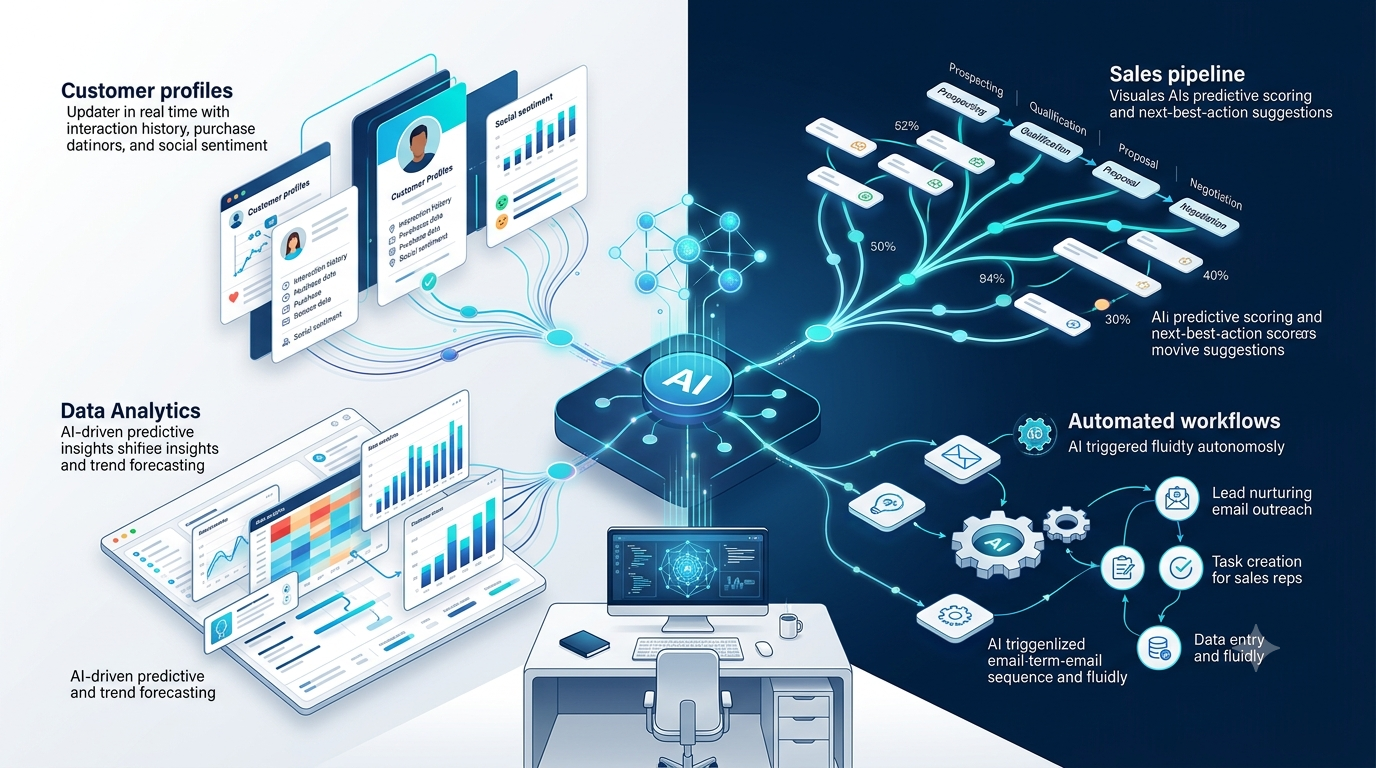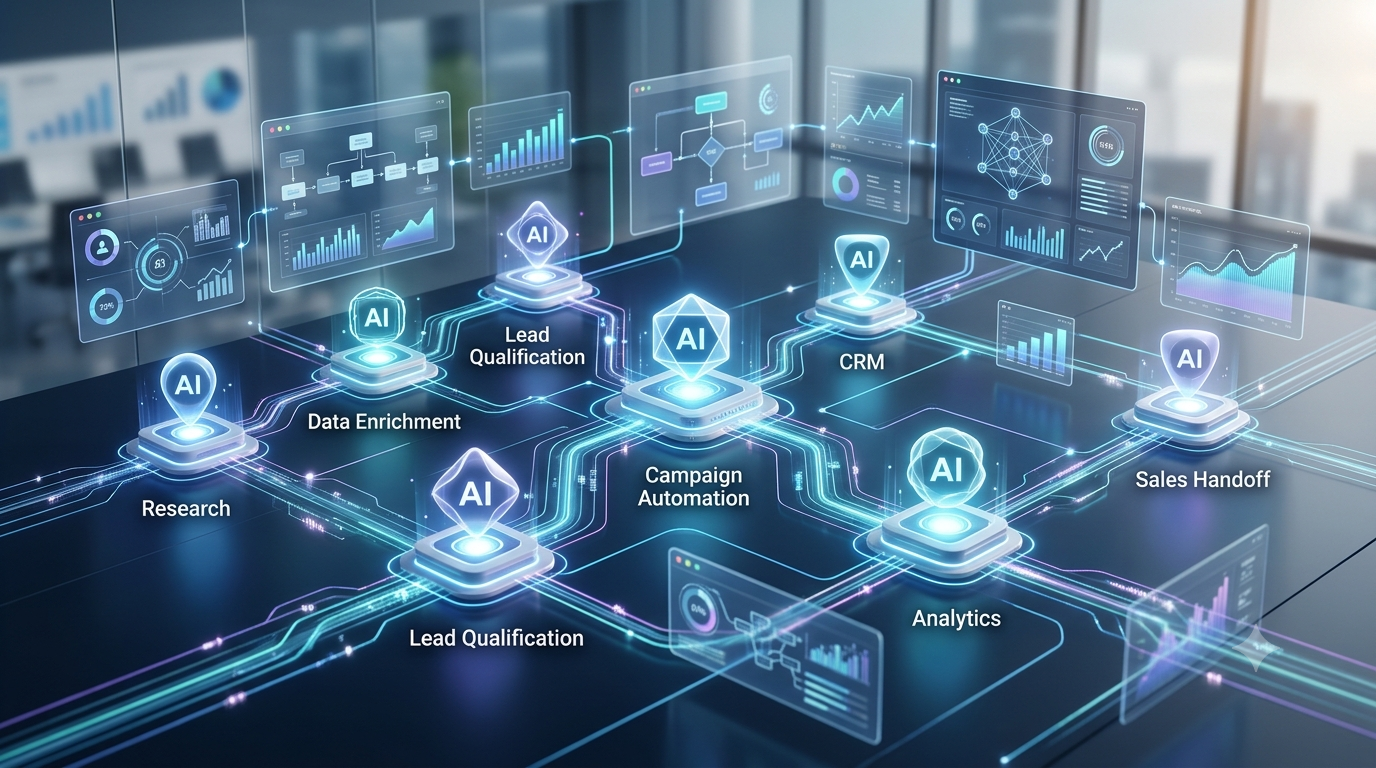


Artificial intelligence is changing how businesses understand customers, deliver marketing messages, and build long-term relationships. What once required extensive manual research, audience segmentation, and campaign management can now be supported by intelligent systems that analyze customer behavior, identify buying signals, and recommend relevant interactions in real time.
In 2026, AI-powered personalization is entering a new phase in business-to-business (B2B) marketing. The shift is moving beyond simply adding a prospect’s name to an email or sending industry-specific content. Businesses are increasingly exploring AI systems that can understand account-level requirements, recognize individual buyer preferences, predict purchasing intent, and coordinate personalized experiences across multiple marketing and sales channels.
The growing adoption of generative AI, predictive analytics, customer data platforms, and agentic AI is making this transformation possible. Instead of relying entirely on predefined campaign journeys, marketers can increasingly use intelligent systems to adapt messaging and engagement strategies based on changing customer needs.
This development is particularly important for B2B organizations, where purchasing decisions involve multiple stakeholders, longer sales cycles, complex requirements, and significant investment considerations.
As buyer expectations continue to evolve, businesses that combine accurate data, intelligent automation, and meaningful personalization may gain a stronger competitive advantage.
The Shift From Traditional Personalization to AI-Powered Experiences
Traditional B2B personalization has primarily focused on audience segmentation. Marketing teams divide prospects according to industry, company size, job title, geographic location, or previous interactions. They then develop campaigns for each segment.
Although this approach remains valuable, it often fails to address the individual requirements of different decision-makers within the same organization.
For example, a technology company evaluating a marketing automation platform may involve several stakeholders:
- A Chief Marketing Officer focused on revenue growth and campaign performance.
- A Marketing Operations Manager interested in automation and integration.
- An IT Director concerned about security and technical compatibility.
- A Finance Manager evaluating costs and return on investment.
Sending the same marketing message to all four stakeholders is unlikely to generate meaningful engagement.
AI-powered personalization takes a more detailed approach. It can analyze available account information, professional roles, engagement history, content preferences, and buying signals to help businesses understand what different stakeholders need.
This allows marketing teams to develop more relevant messages, recommend appropriate resources, and coordinate interactions according to each buyer’s position in the purchasing journey.
The objective is no longer simply to personalize communication. It is to make every interaction more useful, timely, and relevant.
Why AI-Powered Personalization Is Becoming a B2B Marketing Priority
B2B buyers increasingly expect the same level of convenience and relevance they experience when interacting with consumer brands. They want businesses to understand their requirements without forcing them to repeatedly explain their challenges.
Several developments are accelerating the adoption of AI-powered personalization.
1. Increasingly Complex B2B Buying Journeys
B2B purchasing decisions rarely depend on a single individual. Different stakeholders participate in research, evaluation, financial approval, and final purchasing decisions.
AI helps marketers analyze these different interactions and develop a more complete understanding of the buying committee.
For example, when several employees from one organization engage with different resources, AI-powered systems can help identify the account’s broader interests and potential requirements.
Marketing teams can then coordinate account-based campaigns instead of treating every interaction as an isolated lead.
2. Growing Demand for Relevant Communication
Business professionals receive large volumes of marketing emails, advertisements, sales messages, and promotional content every day.
Generic communication is increasingly easy to ignore.
AI-powered systems can help businesses identify relevant topics, recommend suitable content, and adjust messaging based on available engagement information.
For instance, a prospect researching database management may receive educational content about data accuracy, database enrichment, and verification rather than an unrelated promotional email.
3. The Expansion of Generative AI
Generative AI has made it easier for marketing teams to create content variations for different industries, personas, and customer requirements.
Instead of manually producing every version, marketers can use AI to develop initial drafts of emails, landing pages, social media messages, advertisements, and campaign resources.
Human review remains important to ensure accuracy, brand consistency, and meaningful communication.
4. The Rise of Predictive Analytics
Modern marketing platforms can analyze historical engagement patterns and available behavioral information to identify potential future actions.
These insights can help marketers understand which accounts may be showing increased interest, which content may be relevant, and when sales teams should consider following up.
Predictive analytics does not guarantee that a prospect will purchase. However, it can help organizations prioritize their marketing and sales activities more intelligently.
Agentic AI Is Taking Personalization Beyond Automation
One of the most important developments influencing the next phase of B2B personalization is agentic AI.
Traditional marketing automation generally follows predefined rules. For example, when someone downloads a white paper, the system automatically sends a follow-up email after a specified period.
Agentic AI introduces a more flexible approach.
AI agents can be designed to interpret information, evaluate different options, recommend actions, and complete approved tasks within defined permissions.
In a B2B marketing environment, an AI agent could potentially:
- Analyze account engagement and identify changing interests.
- Recommend relevant content based on a prospect’s professional role.
- Identify accounts that may require additional research.
- Suggest appropriate follow-up timing.
- Help coordinate communication across marketing and sales systems.
- Summarize interactions and provide recommendations to sales representatives.
Consider a company that has several prospects engaging with its website, downloading industry reports, and attending webinars.
An agentic AI system could analyze these interactions, identify common account-level interests, recommend relevant educational resources, and notify the sales team when an account appears ready for further engagement.
However, these capabilities depend on data quality, system integration, governance, and the level of autonomy granted to the AI agent.
According to Gartner’s January 2026 prediction, 60% of brands will use agentic AI to facilitate streamlined one-to-one interactions by 2028. This highlights the growing importance of intelligent systems in the future of personalized customer engagement.
Source: Gartner, 60% of Brands Will Use Agentic AI by 2028.
How AI Is Transforming Key Areas of B2B Marketing
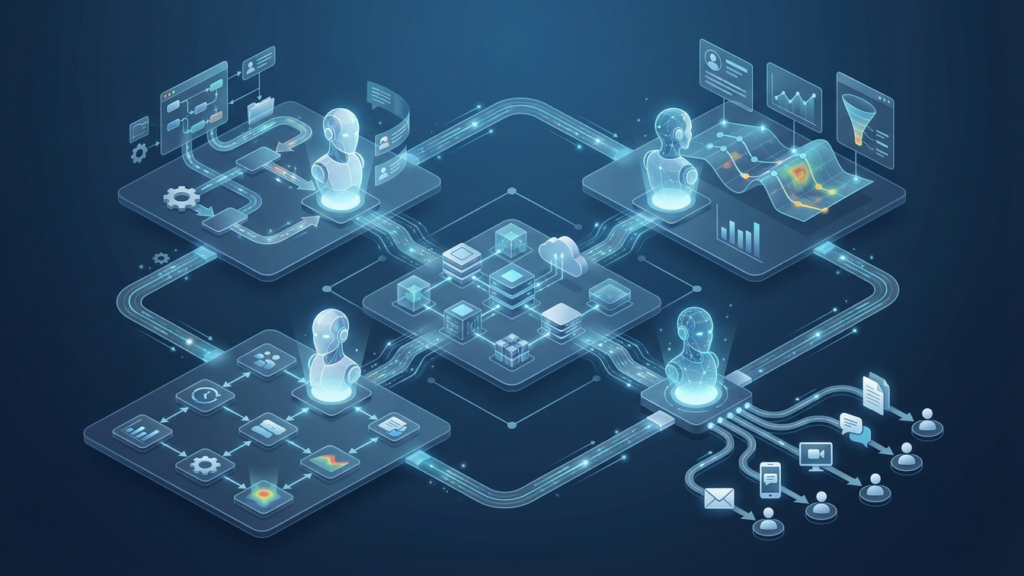
AI-powered personalization is not limited to email campaigns. It can influence several areas of the B2B marketing process.
1. Personalized Email Marketing
Email remains an important channel for B2B communication, but generic email sequences often struggle to maintain engagement.
AI can help marketers personalize email campaigns using relevant information such as industry, professional responsibilities, previous engagement, and content interests.
For example, a campaign targeting a Chief Information Officer may emphasize cybersecurity, system integration, and operational efficiency. A campaign targeting a Demand Generation Manager may focus on campaign performance, lead quality, and pipeline contribution.
AI can also help recommend subject lines, content variations, and follow-up strategies.
The objective should be to deliver relevant information rather than simply increase the number of automated messages.
2. Smarter Account-Based Marketing
Account-Based Marketing (ABM) requires businesses to identify valuable target accounts and develop coordinated campaigns for the people involved in purchasing decisions.
AI can strengthen ABM by combining account intelligence, engagement information, predictive insights, and content recommendations.
For example, if a manufacturing company shows interest in automation technology, AI can help marketing teams identify relevant business challenges and develop messaging around operational efficiency, productivity, and technology integration.
Different stakeholders within that account can receive content aligned with their responsibilities.
This makes ABM more adaptive and helps marketing and sales teams work with a clearer understanding of account-level engagement.
3. AI-Driven Website Personalization
B2B websites are often the first major interaction between a potential customer and a company.
However, traditional websites generally present the same experience to every visitor.
AI-powered website personalization can help businesses recommend relevant resources, highlight suitable services, and adapt certain content elements based on available visitor information and consent settings.
For example:
- A first-time visitor may see introductory educational content.
- A returning visitor may be directed toward industry-specific resources.
- A visitor exploring a particular service may receive related case studies or technical information.
- An identified account may be presented with relevant business resources where appropriate.
These experiences should be designed carefully to avoid intrusive tracking or inaccurate assumptions about visitors.
4. Predictive Lead Scoring and Qualification
Lead scoring helps businesses prioritize prospects according to their potential relevance and engagement.
Traditional lead scoring often relies on manually assigned points for actions such as opening an email, visiting a website, or downloading a document.
AI-powered lead scoring can consider additional patterns across multiple interactions, account characteristics, and historical conversion information.
This can help identify prospects who demonstrate stronger buying signals.
However, engagement alone should not be treated as proof of purchasing intent. Effective qualification should also consider factors such as business requirements, decision-making authority, budget, and purchasing timelines.
Combining AI insights with established qualification frameworks such as BANT can help sales teams make more informed decisions.
5. Personalized Content Recommendations
B2B buyers often require different types of information at different stages of their purchasing journey.
Someone exploring a business challenge may need an educational article, while a prospect comparing vendors may require a product comparison, case study, or technical document.
AI can analyze available engagement information and recommend content that matches the buyer’s current interests.
This can improve the relevance of marketing communication and help prospects access useful information without navigating through unrelated resources.
Real-Time Data Is Becoming the Foundation of Personalization
AI-powered personalization depends heavily on the quality and availability of data.
Even sophisticated AI systems cannot consistently deliver relevant experiences when the underlying information is outdated, incomplete, duplicated, or inaccurate.
For B2B organizations, effective personalization requires a structured approach to data management.
Important data elements include:
- Firmographic data: Company name, industry, employee size, revenue range, and business location.
- Contact information: Professional name, designation, business email, and relevant contact details.
- Behavioral data: Website interactions, content downloads, webinar participation, and campaign engagement.
- Intent signals: Relevant research activity and available indicators of potential business interest.
- Engagement history: Previous interactions with marketing and sales teams.
- Account relationships: Connections between individual contacts and their respective organizations.
Integrating these information sources can help businesses create a more complete picture of their target audience.
Adobe’s 2026 AI and Digital Trends in B2B Journey Orchestration report highlights this challenge. Its research found that only 41% of surveyed B2B organizations had a unified customer data foundation capable of supporting AI at scale.
This demonstrates an important reality: investing in AI technology is not enough. Businesses must also establish reliable data foundations and connect their marketing systems.
Source: Adobe, 2026 AI and Digital Trends in B2B Journey Orchestration.

The Role of Hyperpersonalization in Modern B2B Campaigns
Hyperpersonalization represents a more advanced approach to delivering relevant customer experiences.
Instead of relying only on broad audience categories, it uses multiple information sources to understand the context of individual buyers and accounts.
For example, a company providing cybersecurity solutions may identify a target account in the financial services industry.
Its marketing team could develop different experiences for the account’s stakeholders:
- The Chief Information Security Officer receives content about security risks and compliance.
- The IT Manager receives technical resources about system implementation.
- The Finance Director receives information about operational costs and business value.
- The Procurement Manager receives details about vendor evaluation and service requirements.
AI can help organize these content variations and recommend suitable communication based on available information.
McKinsey’s 2026 Global B2B Pulse Survey reinforces the growing importance of this approach. Its research, involving nearly 4,000 decision-makers across 13 countries, found that market leaders were four times more likely than their peers to deploy one-to-one personalization.
The research also highlighted how AI adoption and personalization can work together to strengthen B2B growth strategies.
Source: McKinsey, The Surprising Economics of B2B Growth.
Challenges Businesses Must Address Before Scaling AI Personalization
Although AI offers significant opportunities, implementing personalization at scale requires careful planning.
1. Poor Data Quality
Outdated contact records, inaccurate job titles, duplicate entries, and incomplete company information can lead to irrelevant communication.
Businesses should prioritize data validation, enrichment, verification, and regular database maintenance before expanding AI-driven campaigns.
2. Data Privacy and Compliance
Personalization requires responsible handling of customer information.
Organizations must follow applicable privacy regulations, respect consent requirements, establish appropriate data access controls, and communicate transparently about data usage.
Collecting more information does not automatically create better customer experiences.
3. Over-Automation
Automating every customer interaction can make communication feel repetitive or impersonal.
AI should support meaningful engagement rather than replace human judgment in situations that require expertise, negotiation, or relationship building.
4. Integration Between Marketing and Sales
Disconnected marketing and sales systems can create inconsistent customer experiences.
For example, a prospect may receive a promotional email even after discussing the same service with a sales representative.
Integrating CRM platforms, marketing automation tools, and customer data systems can help reduce these inconsistencies.
5. Measuring Actual Business Results
Higher email engagement or increased website activity does not necessarily translate into revenue growth.
Businesses should evaluate AI personalization using meaningful performance indicators, including:
- Marketing-qualified leads (MQLs).
- Sales-qualified leads (SQLs).
- Account engagement.
- Meeting and appointment conversion rates.
- Sales pipeline contribution.
- Opportunity conversion rates.
- Customer retention and lifetime value.
These metrics help organizations understand whether personalization is contributing to measurable business outcomes.
How B2B Companies Can Prepare for the Next Phase of AI Personalization
Businesses do not need to completely rebuild their marketing operations to begin adopting AI-powered personalization.
A structured implementation strategy can help organizations introduce these capabilities gradually.
Step 1: Establish a Reliable Data Foundation
Begin by reviewing existing customer and prospect databases. Identify duplicate records, outdated contact information, incomplete company profiles, and inconsistent data fields.
Accurate data is essential for meaningful personalization.
Step 2: Understand Your Target Audience
Develop clear buyer personas and account profiles. Identify the challenges, priorities, purchasing responsibilities, and information requirements of different decision-makers.
Step 3: Identify High-Value Personalization Opportunities
Start with practical applications such as personalized email campaigns, account-based marketing, predictive lead scoring, and content recommendations.
Prioritize areas where improved relevance can create measurable business value.
Step 4: Integrate Marketing Technology
Connect CRM platforms, marketing automation systems, analytics tools, and relevant customer data sources.
A connected technology environment can provide better visibility into customer interactions.
Step 5: Introduce AI With Human Oversight
Use AI to support research, content recommendations, campaign optimization, and engagement analysis.
Keep human teams involved in strategic decisions, sensitive communication, content approval, and sales qualification.
Step 6: Monitor and Improve Performance
Measure campaign effectiveness regularly. Compare personalized campaigns with relevant baseline performance and identify opportunities for improvement.
AI personalization should be treated as an ongoing optimization process rather than a one-time technology implementation.
What the Future Holds for AI-Powered B2B Marketing
The next phase of B2B marketing will likely involve more connected, intelligent, and adaptive customer experiences.
Several developments are expected to influence how businesses approach personalization.
Autonomous Marketing Workflows: AI agents will increasingly support campaign coordination, data analysis, content recommendations, and approved marketing activities.
Predictive Customer Engagement: Businesses will use predictive insights to identify potential customer requirements and determine more appropriate engagement opportunities.
Buying Committee Personalization: Marketing strategies will increasingly consider the different priorities of stakeholders within the same target account.
Conversational AI Experiences: AI-powered assistants will help prospects explore solutions, access information, and receive answers to relevant business questions.
Omnichannel Personalization: Email, websites, social media, digital advertising, and sales interactions will become more connected through shared customer intelligence.
Stronger Data Governance: As AI adoption grows, businesses will need more transparent data practices, stronger security controls, and clear accountability for automated decisions.
The transition will not happen equally across all organizations. Companies with reliable data, integrated technology, clear processes, and skilled marketing teams are likely to be better positioned to take advantage of these developments.
Final Thoughts: Personalization Must Deliver Value, Not Just Automation
AI-powered personalization is changing the expectations of modern B2B marketing. The shift from traditional segmentation toward intelligent, context-aware engagement creates new opportunities for businesses to understand their audiences and deliver more relevant experiences.
However, the real advantage will not come from using the largest number of AI tools or automating every marketing activity.
It will come from combining accurate business data, meaningful audience insights, intelligent automation, and human expertise.
Organizations that focus on understanding individual buyers, recognizing account-level requirements, and delivering useful information at the right time can build stronger relationships throughout the purchasing journey.
As AI and agentic technologies continue to evolve, B2B personalization will become less about sending more messages and more about creating better interactions.
For modern B2B marketers, the next competitive advantage may not simply be reaching more prospects. It may be understanding the right prospects better and giving them a more relevant reason to engage.
Frequently Asked Questions (FAQs)
AI-powered personalization uses artificial intelligence, customer data, predictive analytics, and automation to deliver relevant marketing experiences based on individual buyer preferences, professional roles, account requirements, and engagement behavior.
AI helps marketers analyze customer information, identify engagement patterns, recommend relevant content, improve lead scoring, and personalize communication across different channels.
Traditional personalization generally uses basic audience information such as industry, job title, or company size. Hyperpersonalization combines multiple data points and behavioral insights to create more contextual and individualized experiences.
Agentic AI refers to AI systems that can interpret information, make decisions within defined boundaries, and perform approved tasks. In B2B marketing, these systems can support campaign coordination, account research, engagement recommendations, and workflow automation.
Yes. AI can help identify relevant prospects, analyze buying signals, recommend suitable communication, and prioritize accounts for sales follow-up. However, lead quality still depends on accurate data and proper qualification.
Major challenges include poor data quality, fragmented technology systems, privacy and compliance requirements, over-automation, limited AI expertise, and difficulties measuring actual business results.
AI is more likely to transform marketing responsibilities than completely replace human marketers. Strategic planning, creativity, relationship building, business understanding, and decision-making will continue to require human expertise.
Businesses can begin by improving their customer databases, developing buyer personas, integrating marketing systems, introducing AI-assisted campaign tools, and measuring the performance of personalized marketing activities.