The Rise of AI-First Marketing Agencies and What It Means for Traditional Firms

The Marketing Agency Industry Is Entering an AI-First Era
Artificial intelligence is no longer simply another software category that marketing agencies can add to their technology stack. It is increasingly becoming part of the operating model itself.
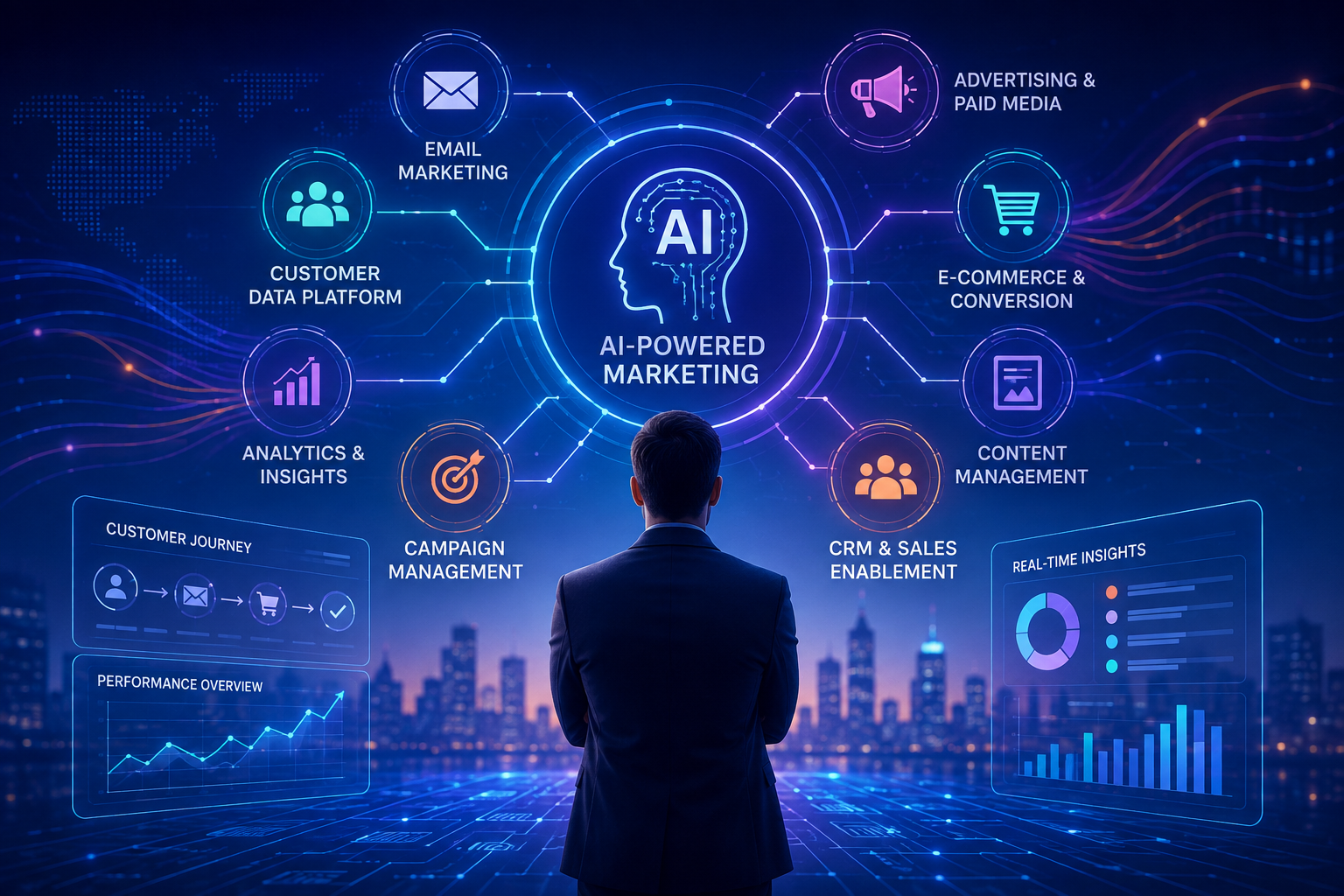
In 2026, a new type of agency is gaining attention: the AI-first marketing agency. Unlike traditional agencies that adopt AI to improve existing processes, AI-first firms build their workflows, teams, services, reporting systems, and client delivery models around artificial intelligence from the beginning.
The difference is significant.
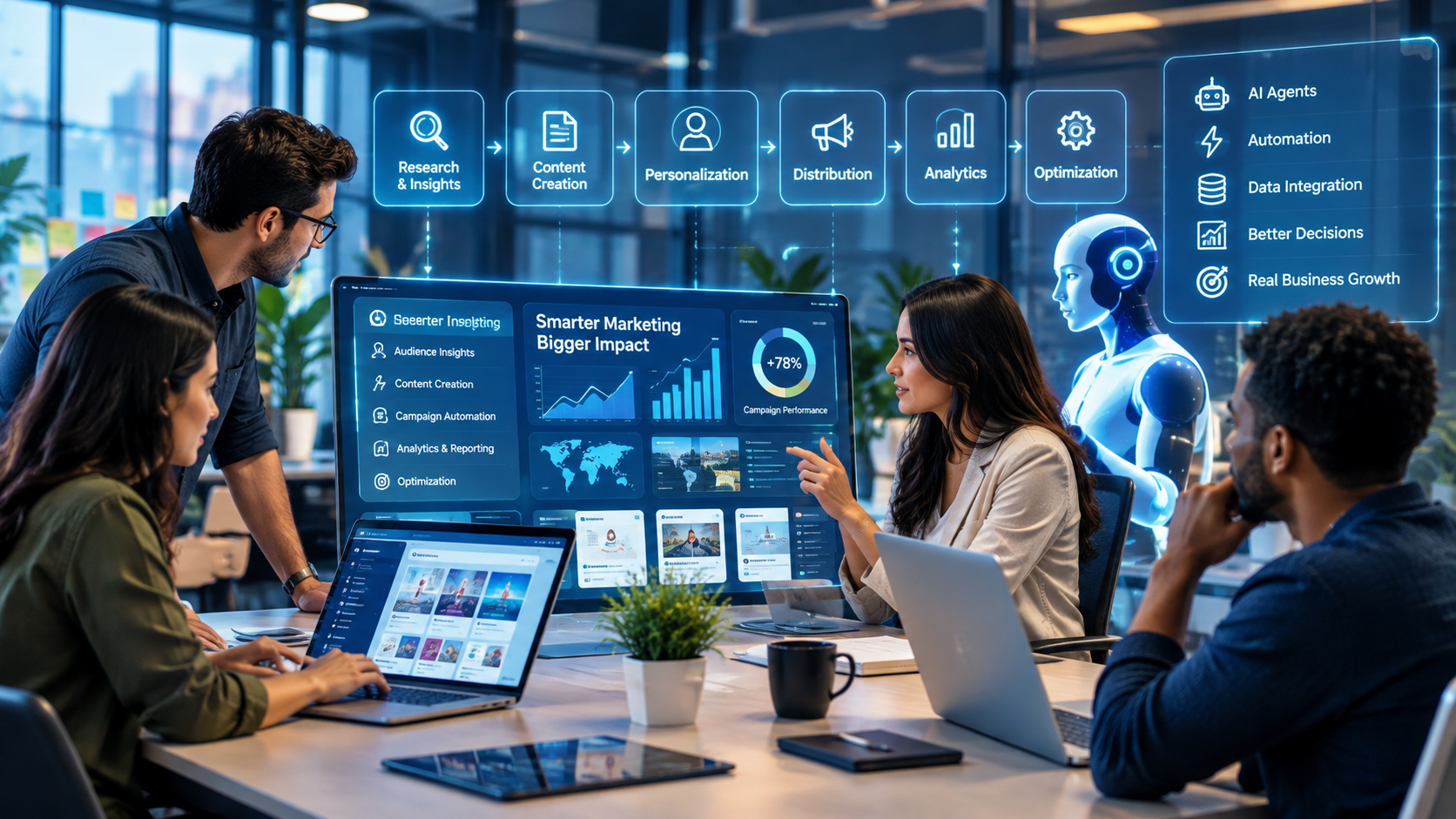
A traditional agency might use AI to write a first draft of an email, generate social media ideas, summarize campaign data, or create variations of an advertisement. An AI-first agency may use interconnected AI systems and agents to conduct research, analyze audiences, develop campaign concepts, generate multiple creative variations, monitor performance, identify optimization opportunities, and support execution across several channels.
That does not mean humans disappear from the process. Instead, their responsibilities increasingly move toward strategy, creative direction, brand management, customer understanding, quality control, and decision-making.
Recent industry research illustrates how quickly this transformation is happening. BCG’s 2026 CMO research found that 96% of surveyed CMOs said AI is driving end-to-end transformation of marketing, although only about one-third said they had actually completed the work required to make that transformation real.
For traditional marketing firms, this creates both a challenge and an opportunity.
The agencies that treat AI as a productivity feature may find themselves competing against companies that have redesigned their entire business around AI-enabled delivery.
What Is an AI-First Marketing Agency?
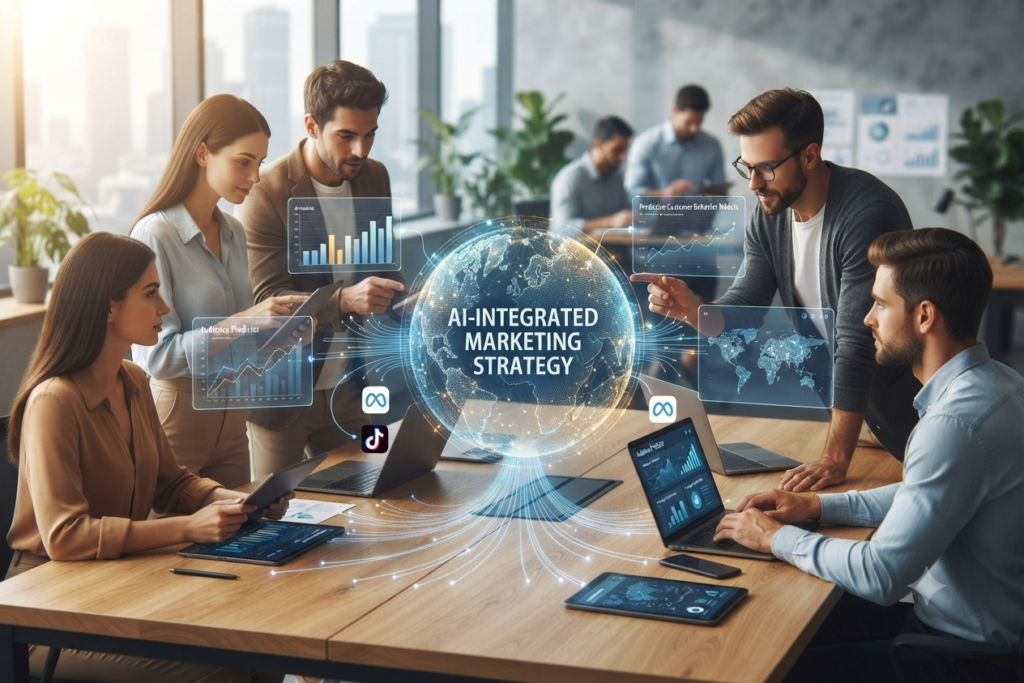
An AI-first marketing agency is not simply an agency that uses ChatGPT or other generative AI tools.
The term describes a broader approach to building and delivering marketing services.
Traditional agencies generally organize work around specialized human teams. A client may have an account manager, strategist, copywriter, designer, SEO specialist, paid media manager, data analyst, and other specialists.
AI-first agencies can organize the same workflow around a combination of human experts, AI systems, automation platforms, data infrastructure, and specialized AI agents.
The objective is not necessarily to reduce the number of people involved. The objective is to reduce unnecessary manual work while increasing the speed, scale, and consistency of marketing operations.
For example, an AI-first B2B marketing workflow could involve AI-supported systems for:
- ICP and buyer research
- Account research
- Content research
- Keyword analysis
- Competitive intelligence
- Email personalization
- Content creation
- Creative variations
- Lead scoring
- Campaign monitoring
- Performance analysis
- Reporting
- Audience segmentation
- Marketing automation
- Customer journey optimization
Human specialists remain responsible for setting objectives, reviewing outputs, managing brand standards, interpreting business context, and making important decisions.
This creates a different agency operating model.
AI Is Moving From Tool to Operating System
One of the most important developments in the marketing industry is the transition from using AI for individual tasks to integrating AI throughout the marketing workflow.
For years, marketers treated automation as a collection of disconnected tools. One platform handled email marketing. Another managed CRM data. Another handled advertising. Another handled analytics.
AI is increasingly connecting these activities.
AI agents can potentially monitor information, interpret data, recommend actions, execute defined tasks, and feed results back into the next stage of a workflow.
This is why the concept of agentic marketing is becoming increasingly important.
Research from BCG highlights that many organizations remain at the stage where generative AI assists humans with individual tasks rather than fundamentally changing how marketing operates.
The next stage is more ambitious.
Instead of asking an AI system to “write five email subject lines,” marketers can build workflows where AI analyzes an audience, identifies messaging opportunities, generates campaign variations, monitors engagement, and recommends the next action.
That represents a fundamental change in how marketing work can be structured.
For agencies, this could be one of the biggest operating model changes since the rise of digital marketing.
Why AI-First Agencies Are Gaining Momentum
Faster Campaign Execution
Speed has always mattered in marketing, but AI is increasing the potential speed of execution.
A campaign that previously required several days of research, content development, revisions, data preparation, and reporting can potentially move through some of those stages much faster with AI-assisted workflows.
This allows agencies to test more ideas without increasing production time at the same rate.
For B2B marketers, this can be particularly valuable because campaigns often require multiple audience segments, account lists, messages, channels, and follow-up sequences.
AI can help agencies manage this complexity more efficiently.
Greater Personalization
Traditional personalization often relies on inserting a person’s first name or company name into an email.
AI-first marketing can go considerably deeper.
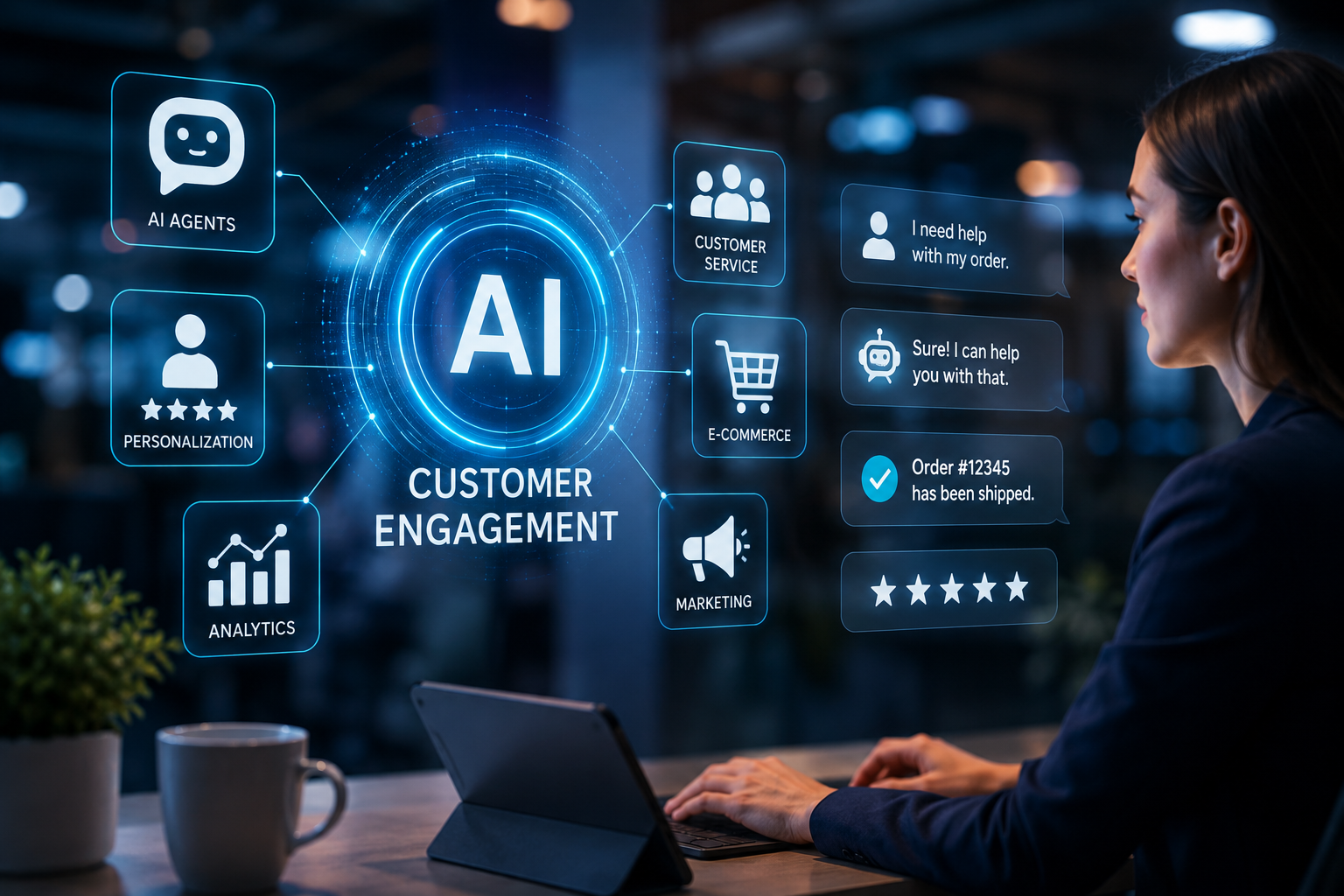
AI systems can analyze firmographic information, industry characteristics, content interests, buying signals, job roles, previous interactions, and other available data to help marketers develop more relevant messaging.
For an ABM campaign, for example, messaging can be adapted based on the characteristics of individual accounts rather than relying entirely on one generic campaign.
This creates an opportunity for agencies to deliver personalization at a scale that would be difficult to achieve through manual processes alone.
Higher Content Production Capacity
Content production has become one of the clearest areas where AI is changing agency economics.
AI can assist with research, outlines, first drafts, content variations, translations, summaries, social posts, email variations, and creative concepts.
However, higher production volume does not automatically mean better marketing.
Forrester reported in June 2026 that nine in ten US marketing agencies were using generative AI, while half were using agentic AI for marketing execution. The research also warned that an excessive focus on productivity and cost efficiency can undermine creativity and long-term brand growth.
That warning is important.
The advantage will not belong to the agency that simply produces the most content. It will belong to agencies that combine AI’s production capabilities with strong strategy, original thinking, brand knowledge, and human judgment.
The Traditional Agency Model Is Under Pressure
Traditional marketing firms are not disappearing overnight.
They still possess assets that many AI-first companies cannot easily reproduce.
These include:
- Established client relationships
- Industry expertise
- Brand knowledge
- Creative reputation
- Strategic experience
- Large-scale production capabilities
- Media relationships
- Institutional knowledge
- Human creative talent
- Understanding of complex organizational environments
However, the economics of agency services are changing.
When AI reduces the time required to complete certain production activities, clients may begin questioning traditional pricing structures.
If a task previously required several hours of manual work but can now be completed with AI-assisted systems and human review, clients may ask why they should continue paying for the same volume-based model.
This is already affecting the traditional agency retainer model.
A recent Financial Express report highlighted how AI is automating areas such as content adaptation, social media asset creation, performance modifications, and other activities historically handled by agencies.
The implication is clear: agencies need to demonstrate value beyond simply producing marketing assets.
The Shift From Deliverables to Business Outcomes
The traditional agency relationship often revolves around deliverables.
A client might purchase:
- 20 social media posts
- Four blogs
- Two email campaigns
- A monthly media plan
- Ten creative assets
- A monthly reporting package
AI challenges the economics of this approach because many deliverables can be produced faster and at greater scale.
The more valuable question becomes:
What business outcome did the agency help create?
That could mean:
- More qualified pipeline
- Lower customer acquisition costs
- Higher conversion rates
- Improved marketing efficiency
- Better account engagement
- Increased revenue
- Faster campaign optimization
- Stronger customer retention
This creates an opportunity for traditional agencies to reposition themselves.
Instead of selling production hours, they can sell strategic expertise, business outcomes, customer intelligence, creative direction, and measurable growth.
AI-First Does Not Mean Human-Free
One of the biggest misconceptions about AI-first agencies is that they are built around replacing humans.
The stronger model is closer to human-led, AI-amplified marketing.
AI is particularly effective at processing large amounts of information, identifying patterns, generating variations, summarizing data, and handling repetitive workflows.
Humans remain essential for understanding context, making strategic decisions, evaluating originality, managing relationships, understanding organizational politics, and determining whether a marketing idea actually makes sense.
Consider a B2B campaign.
AI can analyze hundreds of companies and identify patterns across industries, job functions, technologies, and engagement data.
But a human strategist still needs to determine whether the campaign’s positioning aligns with the client’s market reality.
AI can generate an email.
A human needs to decide whether that email sounds credible, differentiated, and appropriate for the audience.
AI can identify a performance anomaly.
A human needs to determine whether it represents a real market change or simply an unusual data point.
The future of marketing agencies is therefore unlikely to be purely human or purely artificial.
It will be increasingly hybrid.

Traditional Agencies Have an Important Advantage
Despite the growth of AI-first firms, traditional agencies should not assume that they are automatically behind.
In fact, established agencies have several advantages.
Their biggest advantage may be institutional trust.
Large organizations often do not want a technology vendor that simply produces content. They want partners that understand their brand, customers, industry, compliance requirements, organizational structure, and long-term business objectives.
That knowledge takes time to develop.
Traditional agencies also have years of accumulated experience in creative development, media strategy, brand management, market research, and client services.
The challenge is converting that knowledge into an AI-enabled operating model.
Google’s 2026 agency research, conducted with BCG, found that agencies were on average 35% more advanced than advertisers across a broad range of AI marketing use cases. However, only 42% of advertisers said their agency had helped educate them about AI solutions.
This reveals an interesting opportunity.
Agencies do not only need to use AI internally. They need to become trusted advisors that help clients understand how AI can change marketing.
The New Competition Is About AI Infrastructure
The next generation of agency competition may not simply be about creative talent or media buying expertise.
It may increasingly be about infrastructure.
An AI-first agency can differentiate itself through:
Proprietary Data Systems
Agencies that organize high-quality customer, campaign, behavioral, and market data can create more intelligent workflows.
AI Agents
Specialized agents can perform defined functions such as research, content analysis, reporting, audience segmentation, or campaign monitoring.
Workflow Automation
Connecting CRM, marketing automation, analytics, advertising, content, and customer data can reduce manual handoffs.
Measurement
AI can help agencies identify patterns across large datasets and provide faster campaign insights.
Knowledge Systems
Agencies can create structured knowledge bases containing brand guidelines, customer information, campaign history, positioning, product information, and other business context.
The competitive advantage comes from how these components work together.
Why Simply Adding ChatGPT Is Not Enough
There is an important distinction between becoming an AI-enabled agency and becoming an AI-first agency.
An agency can purchase AI subscriptions and still operate exactly as it did five years ago.
That is not transformation.
Adding AI to an existing workflow without changing the workflow may produce only incremental productivity improvements.
Forrester describes this broader challenge as an operating model reset. The firm’s analysis argues that AI creates value when organizations redesign workflows and management systems rather than simply inserting AI into old processes.
This is a critical lesson for traditional firms.
The question should not be:
“Which AI tool should we buy?”
The better question is:
“Which parts of our marketing operating model should be redesigned because AI can now perform them differently?”
That shift in thinking separates AI adoption from AI transformation.
How Traditional Marketing Firms Can Respond
Traditional agencies do not necessarily need to rebuild everything at once.
A practical transition can happen in stages.
Start With Repetitive Work
Identify activities that consume significant employee time but require limited strategic judgment.
Examples include reporting, research summaries, content formatting, campaign monitoring, data organization, and repetitive content variations.
These are strong candidates for AI-assisted workflows.
Build Human Review Into AI Processes
AI outputs should not automatically become client-facing deliverables.
Agencies should establish review processes for accuracy, brand consistency, originality, privacy, compliance, and strategic relevance.
Train Existing Employees
AI transformation is not only a technology project.
Account managers, strategists, writers, designers, analysts, and other professionals need to understand how AI changes their work.
The strongest employees may become those who know how to combine domain expertise with AI capabilities.
Redesign Pricing Models
As production becomes faster, charging entirely by hours or deliverables may become less attractive.
Agencies can explore pricing based on strategy, outcomes, ongoing optimization, performance, consulting, or access to specialized capabilities.
Develop AI Strategy Services
Clients increasingly need help deciding how AI should be incorporated into their own marketing organizations.
Agencies can become advisors rather than simply execution partners.
What Happens to Agency Jobs?
AI will change agency roles, but the impact is unlikely to be uniform.
Some repetitive responsibilities will become heavily automated.
Other roles may evolve.
A content writer may spend less time producing first drafts and more time developing messaging strategy and editorial direction.
A media analyst may spend less time preparing reports and more time interpreting complex performance patterns.
An account manager may spend less time coordinating repetitive tasks and more time acting as a strategic advisor.
Creative professionals may use AI to explore hundreds of concepts before selecting and developing the strongest ideas.
The biggest risk is not necessarily that every job disappears.
The bigger risk is that the skills required to perform those jobs change faster than employees can adapt.
This makes training and workforce development central to the industry’s future.
AI Could Also Change Agency Consolidation
AI is likely to influence mergers, acquisitions, and agency consolidation.
Agencies with proprietary technology, strong data capabilities, AI expertise, specialized customer relationships, and scalable workflows may become particularly attractive acquisition targets.
At the same time, smaller AI-native agencies can compete with much larger firms because AI reduces some of the traditional advantages associated with scale.
Marketing agency M&A activity is already being discussed in the context of AI-driven consolidation and changing valuation priorities in 2026.
This could create an unusual competitive environment.
Large agencies have resources, relationships, and infrastructure.
Small AI-first firms have speed, specialization, and potentially leaner operating models.
The winners will likely be organizations that combine the strengths of both.
The Rise of AI-First Agencies Could Change Client Expectations
As more companies work with AI-enabled agencies, client expectations will also change.
Clients may expect:
Faster turnaround: Campaign assets and insights may need to be produced in hours rather than days.
More personalization: Generic campaigns may become less acceptable when AI enables more granular targeting.
Continuous optimization: Campaigns may increasingly operate as ongoing systems rather than fixed projects.
Greater transparency: Clients may want to understand how AI is being used, what data is involved, and where humans remain responsible.
Better measurement: Agencies will increasingly need to connect marketing activity with business outcomes.
These expectations could make slow, highly manual agency processes harder to justify.
The Biggest Opportunity May Be AI-Augmented Creativity
There is a tendency to describe AI primarily as an automation technology.
For marketing agencies, its creative potential may be equally important.
AI can allow teams to explore more possibilities.
A creative team can generate multiple campaign territories, visual concepts, messaging directions, audience variations, and content structures before choosing which ideas deserve human development.
That does not automatically produce better creativity.
But it can expand the creative exploration process.
The agency’s value then shifts from simply producing an asset to knowing which idea deserves to be produced.
That is a much more strategic role.
What This Means for B2B Marketing Agencies
The impact could be particularly significant for B2B marketing agencies.
B2B campaigns often involve complex audiences, long buying cycles, multiple stakeholders, account-based marketing, lead qualification, content journeys, and CRM workflows.
AI can potentially connect many of these activities.
For example, an AI-enabled B2B campaign could help with:
- Identifying target accounts
- Researching company and buyer information
- Segmenting audiences
- Developing account-specific messaging
- Creating content variations
- Supporting email personalization
- Monitoring engagement
- Identifying buying signals
- Prioritizing follow-up
- Analyzing campaign performance
- Recommending optimization opportunities
- Supporting sales and marketing alignment
The agency still needs people who understand B2B strategy and buyer behavior.
AI simply changes how much operational work those experts can oversee.
Traditional Firms Should Not Fight AI
The biggest strategic mistake traditional agencies could make is treating AI as an external threat rather than an internal capability.
AI-first competitors are not necessarily winning because they have better AI models.
They may win because they have redesigned their organizations around those models.
Traditional agencies already have many of the assets required to compete: talented people, trusted relationships, industry knowledge, creative capabilities, data, and years of campaign experience.
The next step is connecting those assets to AI-enabled workflows.
The future may therefore not belong exclusively to AI-first agencies.
It may belong to AI-transformed agencies.
What the Next Generation of Marketing Agencies Could Look Like
The marketing agency of the future may look very different from the agency structure that dominated the previous decade.
Instead of large teams manually producing every campaign component, agencies could operate through smaller teams supported by interconnected AI systems.
A strategist could oversee several AI workflows.
A creative director could guide hundreds of concepts.
An analyst could monitor thousands of data points.
An account manager could spend more time with clients because administrative work is automated.
A campaign could continuously learn from engagement data and recommend changes.
The agency would become less of a production factory and more of a marketing intelligence and growth partner.
This is the fundamental industry move happening beneath the AI hype.
The Bottom Line
The rise of AI-first marketing agencies is not simply another technology trend.
It represents a change in how marketing services can be designed, delivered, measured, and priced.
Traditional firms still have significant advantages, particularly client relationships, strategic expertise, creative talent, industry knowledge, and brand trust. But those advantages will become less valuable if agencies continue operating inefficiently while competitors redesign their workflows around AI.
The winners will not necessarily be the agencies with the most AI tools.
They will be the agencies that know where AI creates leverage and where human expertise creates differentiation.
The strongest model is likely to be a combination of both.
AI can handle scale, speed, data processing, repetitive execution, and continuous optimization.
Humans can handle strategy, creativity, judgment, relationships, context, and accountability.
That combination could create a new generation of marketing agencies that are faster, more adaptive, more personalized, and more focused on measurable business outcomes.
For traditional marketing firms, the message is straightforward: AI adoption is no longer just about keeping up with technology. It is becoming a question of whether the agency’s operating model is built for the next era of marketing.

Frequently Asked Questions
An AI-first marketing agency builds its operations around artificial intelligence from the beginning. AI is integrated into research, content, campaign execution, analytics, personalization, reporting, and optimization, while human specialists remain responsible for strategy, creativity, judgment, and quality control.
Traditional agencies typically use AI as an additional tool within existing workflows. AI-first agencies design their workflows around AI capabilities and automation. This can allow them to operate with faster processes, greater personalization, and higher production capacity.
AI is unlikely to eliminate traditional agencies entirely. However, it is likely to change the services they provide, their pricing structures, team responsibilities, and operating models. Agencies that successfully integrate AI may remain highly competitive.
AI will automate some repetitive activities, but many marketing responsibilities require strategy, creativity, judgment, client relationships, and industry expertise. Roles are more likely to evolve significantly than disappear uniformly across the industry.
AI-first agencies can potentially deliver campaigns faster, automate repetitive work, personalize content at greater scale, analyze large amounts of data, and continuously optimize marketing activities.
Traditional agencies should evaluate how AI can improve their workflows and client outcomes. They do not necessarily need to become completely AI-native overnight, but ignoring the change could create a growing competitive disadvantage.
Important skills will include AI literacy, strategic thinking, data analysis, creative direction, prompt and workflow design, marketing automation, customer research, brand management, AI governance, and the ability to evaluate AI-generated outputs.
The biggest challenge is balancing efficiency with quality. Producing more content and campaigns does not automatically produce better marketing. Agencies need strong strategy, human oversight, accurate data, brand governance, and creative differentiation.